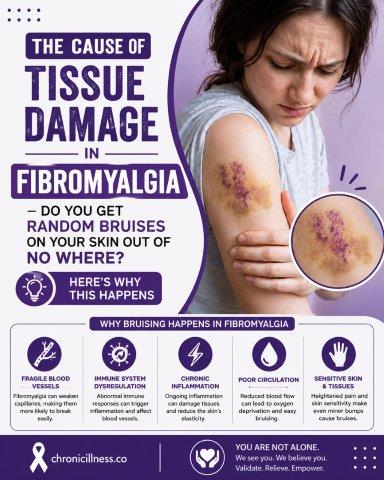
Living with fibromyalgia often means dealing with symptoms that are confusing, frustrating, and difficult to explain. Chronic pain, fatigue, brain fog, muscle tenderness, and sensitivity are already overwhelming enough. But for many people, another puzzling symptom appears unexpectedly—random bruises that seem to show up without explanation.
You wake up one morning and notice a dark bruise on your arm or leg. You do not remember bumping into anything. There was no injury, no fall, and no obvious reason for it to appear. Naturally, this can feel concerning.
Many people living with fibromyalgia report experiencing unexplained bruising or skin sensitivity that makes even small bumps leave visible marks. While bruising is not considered one of the core diagnostic symptoms of fibromyalgia, there are several possible reasons why it may happen more often in people with chronic pain conditions.
Understanding why bruising occurs, how fibromyalgia may contribute to tissue sensitivity, and when bruising could signal another health issue can help reduce confusion and anxiety.
What Is Fibromyalgia?
Fibromyalgia is a chronic condition primarily known for widespread pain throughout the body. However, it is much more than muscle aches.
People with fibromyalgia often experience a combination of symptoms, including:
- Chronic widespread pain
- Extreme fatigue
- Tender points and muscle sensitivity
- Sleep disturbances
- Brain fog or memory problems
- Sensory overstimulation
- Anxiety or mood changes
- Joint stiffness
- Skin sensitivity
The condition affects how the nervous system processes pain signals. Many experts believe that fibromyalgia amplifies pain perception, causing the brain and body to react more strongly to sensations that may not normally hurt.
This heightened sensitivity can affect muscles, tissues, nerves, and even the skin.
For some individuals, this may contribute to easy bruising or tenderness after minor physical contact.
Do People With Fibromyalgia Bruise More Easily?
One of the most commonly discussed concerns among fibromyalgia patients is unexplained bruising.
Many people notice:
- Bruises appearing without remembering an injury
- Darker bruising than expected after minor bumps
- Tenderness in bruised areas
- Skin that seems unusually sensitive
Although fibromyalgia itself is not officially classified as a condition that directly causes bruising, many healthcare professionals acknowledge that people with fibromyalgia frequently report easy bruising and tissue sensitivity.
This does not necessarily mean fibromyalgia damages tissue in the same way as inflammatory diseases. Instead, several underlying factors may explain why bruising appears more common.
The Role of Fragile Blood Vessels
One possible explanation involves fragile capillaries and blood vessels.
Bruises happen when tiny blood vessels under the skin break, allowing blood to leak into surrounding tissue.
In some people with chronic pain conditions, capillaries may be more sensitive or vulnerable to minor physical pressure.
A small bump against furniture, leaning on a hard surface, or even pressure during sleep may cause bruising that would not normally happen in someone else.
Because fibromyalgia often heightens body sensitivity, these minor impacts may also feel more painful.
This can make bruises seem more severe or noticeable.
Why Minor Trauma May Feel Bigger
People with fibromyalgia often experience heightened pain responses.
Something as simple as lightly bumping your arm may feel intense enough to remember, while other times injuries happen so subtly that they go unnoticed.
When bruises appear unexpectedly, it can feel alarming. But in many cases, the body may simply be reacting more strongly to small everyday contact.
Chronic Inflammation and Tissue Sensitivity
Fibromyalgia is not traditionally considered an inflammatory disease like rheumatoid arthritis. However, researchers continue exploring how low-grade inflammation may contribute to symptoms.
Some experts believe ongoing inflammation or abnormal nervous system responses may increase tissue sensitivity.
This can potentially lead to:
- Greater tenderness
- Increased skin sensitivity
- Longer healing times
- More discomfort from minor injuries
When tissues become highly sensitive, even small impacts can create pain and visible marks.
For someone already dealing with chronic discomfort, unexplained bruising can add another layer of frustration.
Poor Circulation and Bruising
Circulation may also play a role.
Many people with fibromyalgia experience symptoms connected to poor blood flow, including:
- Cold hands and feet
- Numbness or tingling
- Temperature sensitivity
- Muscle stiffness
Reduced circulation can sometimes affect how tissues heal and respond to pressure.
If oxygen delivery to tissues becomes less efficient, bruises may appear more easily or linger longer than expected.
Poor circulation may also contribute to the feeling of soreness around bruised areas.
Though more research is still needed, circulation issues are frequently discussed within chronic illness communities.
Sensitive Skin and Heightened Pain Perception
One of the defining features of fibromyalgia is increased sensitivity.
This does not only affect muscles—it can affect skin as well.
Many people report:
- Painful touch sensitivity
- Tender skin
- Burning sensations
- Sensitivity to pressure or clothing
This heightened pain sensitivity is sometimes called allodynia, where normal sensations become painful.
For example:
- Tight clothing may hurt
- Gentle pressure may feel intense
- Small bumps can feel severe
Because skin and tissue sensitivity are amplified, bruising may seem more dramatic or painful than expected.
Even a harmless knock into a table corner may leave a lasting mark.
Immune System Dysregulation
Another possible explanation sometimes discussed involves immune system irregularities.
Although fibromyalgia is not considered an autoimmune disease, some researchers believe immune dysfunction may influence symptoms.
Abnormal immune responses could contribute to:
- Increased inflammation
- Blood vessel sensitivity
- Slower tissue recovery
- Greater skin reactivity
While there is no definitive proof that immune issues directly cause bruising in fibromyalgia, some patients experience overlapping conditions that can affect skin health and healing.
Understanding the full picture of a person's health becomes important when unexplained bruises occur frequently.
Medication Side Effects
Sometimes bruising may not come from fibromyalgia itself but from medications used to manage symptoms.
Certain medications can increase bruising risk, including:
Pain Relievers
Frequent use of anti-inflammatory medications may affect blood clotting in some people.
Antidepressants
Some medications prescribed for fibromyalgia symptoms may increase bruising susceptibility.
Blood Thinners
If a person also takes medications affecting circulation or clotting, bruising can happen more easily.
Supplements
Even natural supplements can influence bruising.
For example:
- Fish oil
- Vitamin E
- Certain herbal products
If bruising suddenly becomes more frequent after starting medication, discussing symptoms with a healthcare provider is important.
Nutritional Deficiencies and Bruising
Easy bruising can sometimes point to nutritional deficiencies.
People with chronic illness may struggle with nutrition due to fatigue, digestive issues, or reduced appetite.
Deficiencies linked to bruising include:
Vitamin C Deficiency
Vitamin C supports healthy blood vessels and skin repair.
Low levels may increase bruising.
Vitamin K Deficiency
Vitamin K helps blood clot properly.
Insufficient levels can lead to easier bruising.
Iron Deficiency
Low iron may contribute to fatigue and bruising in some individuals.
Protein Deficiency
Healthy tissue repair relies on adequate protein intake.
Poor nutrition may slow healing.
Checking nutrient levels may sometimes reveal an underlying cause unrelated to fibromyalgia itself.
Why Random Bruises Feel Emotionally Stressful
For many people, unexplained bruises create emotional distress.
Seeing marks appear without explanation can trigger worries such as:
- “Is something seriously wrong?”
- “Did I injure myself without noticing?”
- “Why does my body keep doing this?”
Living with fibromyalgia already requires navigating uncertainty.
Symptoms fluctuate daily, often without warning.
Adding unexplained bruising to the mix can feel overwhelming.
The emotional side of chronic illness matters.
Not knowing what your body will do from one day to the next can create anxiety and frustration.
This uncertainty is exhausting.
When to Pay Attention to Bruising
Although occasional unexplained bruising may happen, there are times when bruises should not be ignored.
Seek medical evaluation if bruising:
- Appears suddenly and frequently
- Happens without any pressure or injury at all
- Becomes unusually large or painful
- Is paired with bleeding gums or nosebleeds
- Comes with dizziness or severe fatigue
- Appears alongside fever or unexplained illness
Because bruising can sometimes signal blood disorders, clotting problems, vitamin deficiencies, or medication reactions, persistent symptoms deserve medical attention.
It is always better to investigate changes rather than dismiss them.
Managing Sensitive Skin and Bruising in Fibromyalgia
While bruising cannot always be prevented, there are practical ways to reduce discomfort and protect sensitive tissues.
Protect Your Body From Minor Injuries
Simple adjustments may help:
- Use padded furniture edges
- Wear soft, protective clothing
- Be mindful of crowded spaces
- Avoid repetitive pressure on sensitive areas
Prioritize Nutrition
Supporting tissue health matters.
Balanced meals rich in:
- Vitamins
- Minerals
- Healthy fats
- Protein
may support recovery and overall wellness.
Stay Hydrated
Hydration helps circulation and tissue health.
Dehydration can sometimes worsen fatigue and sensitivity.
Monitor Medication Changes
If bruising increases after starting new medication or supplements, keep track of timing and symptoms.
Practice Gentle Movement
Light stretching, walking, or low-impact activity may support circulation without overwhelming the body.
Movement should always match energy levels and pain tolerance.
The Importance of Self-Compassion
Living with fibromyalgia means learning to trust and care for a body that often feels unpredictable.
It is easy to become frustrated when new symptoms appear.
Many people begin questioning themselves:
- “Am I imagining this?”
- “Why can’t my body work normally?”
- “Am I overreacting?”
The answer is no.
Your experiences deserve attention.
Fibromyalgia symptoms are real, even when invisible to others.
Random bruises, tissue tenderness, and sensitivity can feel scary or confusing, especially when there is no obvious explanation.
Self-compassion matters.
That means:
Listening to Your Body
Notice patterns and changes without panic.
Seeking Medical Support When Needed
You do not have to ignore symptoms to prove strength.
Releasing Guilt
Chronic illness is exhausting enough without self-judgment.
Giving Yourself Grace
Some days your body may need more care than others.
That is okay.
Breaking the Silence Around Invisible Symptoms
One of the biggest struggles with fibromyalgia is feeling unseen.
People often expect illness to look obvious.
But invisible symptoms—pain, fatigue, sensory overload, tenderness, bruising—can be just as disruptive.
The more openly people discuss lesser-known experiences like unexplained bruising, the easier it becomes to create understanding.
Validation matters.
No one should feel dismissed simply because their symptoms are difficult to explain.
Final Thoughts
Random bruises in fibromyalgia can feel alarming, especially when they seem to appear out of nowhere. While fibromyalgia itself may not directly cause bruising, factors such as sensitive tissues, fragile blood vessels, poor circulation, inflammation, medications, and nutritional deficiencies may all play a role.
The reality of fibromyalgia is that even small physical stressors can feel much bigger than they appear.
Pain is real.
Sensitivity is real.
Fatigue is real.
And if you find yourself noticing bruises more often, know that you are not alone in wondering why.
Pay attention to your body, track symptoms, seek medical guidance when necessary, and most importantly—offer yourself compassion.
Living with chronic illness requires strength every single day, even when nobody else can see the battle you are fighting.

For More Information Related to Fibromyalgia Visit below sites:
References:
Join Our Whatsapp Fibromyalgia Community
Click here to Join Our Whatsapp Community
Official Fibromyalgia Blogs
Click here to Get the latest Fibromyalgia Updates
Fibromyalgia Stores
Comments
Post a Comment