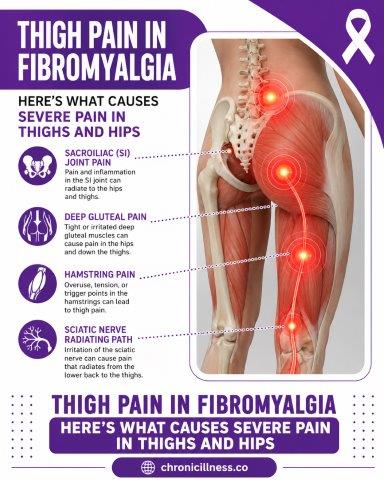
Thigh pain is one of the most frustrating and misunderstood symptoms experienced by people living with fibromyalgia. It can appear suddenly, linger for long periods, or fluctuate in intensity without a clear pattern. For many, it feels like a deep, spreading discomfort that affects not just the thighs but also the hips, lower back, and even down into the knees or calves.
What makes this type of pain especially difficult is that it often does not come from a single injury or obvious physical cause. Instead, it may be linked to how fibromyalgia affects the nervous system, muscles, and pain processing pathways throughout the body. As a result, even normal movement, sitting, or light activity can trigger significant discomfort.
Thigh and hip pain in fibromyalgia is real, physical, and often disabling. Understanding why it happens can help make sense of symptoms that may otherwise feel confusing or overwhelming.
Why Fibromyalgia Causes Pain in the Thighs and Hips
Fibromyalgia is widely believed to involve a condition known as central sensitization. This means the nervous system becomes more sensitive to pain signals, amplifying sensations that would normally feel mild or even unnoticeable.
Instead of filtering pain properly, the brain and spinal cord “overreact,” interpreting normal pressure, movement, or muscle tension as pain. This can lead to widespread discomfort, including in large muscle groups such as the thighs and hips.
The thigh area is especially vulnerable because it contains:
- Large muscle groups that are frequently used for standing, walking, and sitting
- Nerve pathways that connect the lower back, hips, and legs
- Pressure points that can become sensitive with chronic muscle tension
Over time, this combination of heightened sensitivity and muscle strain can make the thighs feel constantly sore, heavy, or painful.
Sacroiliac (SI) Joint Pain and Its Role in Thigh Discomfort
One of the major contributors to thigh and hip pain in fibromyalgia is dysfunction or irritation in the sacroiliac (SI) joints. These joints are located where the lower spine connects to the pelvis, and they play a crucial role in supporting body weight and movement.
When the SI joints become inflamed or irritated, pain can spread beyond the lower back and into the hips, buttocks, and thighs.
How SI Joint Pain Feels
People experiencing SI joint-related pain often describe:
- Deep aching in the lower back or hips
- Sharp pain when standing up or sitting down
- Pain that radiates into one or both thighs
- Discomfort when climbing stairs or walking
- Stiffness after periods of inactivity
In fibromyalgia, the surrounding muscles may already be overly tense or sensitive, which can worsen SI joint discomfort. Even small movements can trigger significant pain responses, making daily activities feel more difficult than usual.
Deep Gluteal Muscle Pain and Radiating Thigh Sensations
Another common source of thigh pain in fibromyalgia is deep gluteal muscle tension. The gluteal muscles, located in the buttocks, are among the largest and most powerful muscles in the body. They support movement, posture, and stability.
When these muscles become tight or irritated, they can create pain that spreads into the hips and thighs.
Why Deep Gluteal Pain Happens
In fibromyalgia, muscle tissue often remains in a state of constant tension. This can be due to:
- Prolonged stress on the nervous system
- Reduced muscle recovery during sleep
- Sensitivity of trigger points in muscle tissue
- Poor posture due to chronic discomfort
- Reduced physical activity during flare-ups
When the deep gluteal muscles are affected, they may develop trigger points—small, sensitive areas that produce pain not only locally but also in distant regions such as the thighs.
What It Feels Like
Deep gluteal pain often presents as:
- A dull, aching sensation in the buttocks
- Tightness when sitting for long periods
- Pain that spreads down the back or sides of the thighs
- Discomfort when rising from a seated position
This type of pain can easily be mistaken for nerve-related issues because of how far it can radiate.
Hamstring Pain and Overuse Sensitivity in Fibromyalgia
The hamstrings, located at the back of the thighs, are frequently affected in fibromyalgia. These muscles are essential for walking, bending, and maintaining balance.
In fibromyalgia, even normal levels of use can feel like overuse. This is because the muscles and nerves process physical stress differently, often exaggerating pain signals.
Causes of Hamstring Pain
Several factors contribute to hamstring discomfort in fibromyalgia:
- Muscle fatigue from daily activity
- Tightness caused by prolonged sitting or inactivity
- Trigger points forming in muscle tissue
- Reduced blood flow during flare-ups
- Heightened nerve sensitivity
How It Feels
Hamstring pain may be experienced as:
- Tight, pulling sensations in the back of the thigh
- Cramping or stiffness when moving
- Soreness after light physical activity
- Increased pain when stretching or bending
Many people find that hamstring discomfort worsens after long periods of sitting, especially in work environments or during travel.
Sciatic Nerve Irritation and Radiating Thigh Pain
One of the most misunderstood causes of thigh pain in fibromyalgia is irritation of the sciatic nerve pathway. The sciatic nerve is the largest nerve in the body, running from the lower back through the hips, buttocks, and down each leg.
When this nerve becomes irritated or compressed, it can cause pain that radiates along its entire pathway, including the thighs.
Sciatic-Type Pain in Fibromyalgia
While not all thigh pain in fibromyalgia is true sciatica, nerve sensitivity and muscle tightness can mimic similar symptoms. This happens because fibromyalgia can increase overall nerve responsiveness, making the body more sensitive to pressure or irritation.
Symptoms of Sciatic-Related Thigh Pain
People may experience:
- Sharp or shooting pain in the thigh
- Burning sensations along the leg
- Tingling or “pins and needles” feelings
- Pain that travels from the lower back into the thigh
- Increased discomfort when sitting or standing for long periods
Even mild pressure on surrounding muscles can intensify nerve-related discomfort in individuals with fibromyalgia.
How Fibromyalgia Amplifies Thigh and Hip Pain
The key feature of fibromyalgia is not just pain itself, but how the body processes pain. The nervous system becomes hypersensitive, meaning even small triggers can produce significant discomfort.
This amplification affects the thighs and hips in several ways:
Increased Muscle Sensitivity
Muscles that would normally recover quickly from strain may remain sore or tender for extended periods.
Lower Pain Threshold
Normal pressure from sitting, walking, or lying down may feel uncomfortable or painful.
Widespread Pain Spread
Pain is not always localized. It can shift between the hips, thighs, and lower back, making it difficult to pinpoint a single source.
Flare-Up Cycles
Symptoms may intensify during flare-ups, often triggered by:
- Stress
- Poor sleep
- Overexertion
- Weather changes
- Emotional strain
During these periods, thigh pain can become significantly more intense and limiting.
Daily Life Challenges Caused by Thigh Pain
Thigh pain in fibromyalgia can significantly interfere with daily activities. Because the thighs are essential for movement and stability, discomfort in this area can affect nearly everything a person does.
Difficulty with Movement
Simple actions such as walking, standing up, or climbing stairs may become painful or exhausting.
Sitting Discomfort
Long periods of sitting can worsen tightness in the hips, glutes, and hamstrings.
Reduced Activity Levels
Pain may discourage physical activity, which can lead to muscle stiffness and increased sensitivity over time.
Sleep Disruption
Thigh and hip pain can make it difficult to find a comfortable sleeping position, contributing to poor sleep quality.
This combination of symptoms often creates a cycle where pain leads to inactivity, and inactivity leads to more stiffness and discomfort.
Why Rest Alone Is Not Always Enough
While rest is important during fibromyalgia flare-ups, too much inactivity can sometimes worsen thigh pain. Muscles may become stiffer, and circulation may decrease, increasing discomfort.
This does not mean pushing through pain aggressively is helpful either. Instead, fibromyalgia management often requires a balanced approach that avoids both overexertion and prolonged inactivity.
Approaches That May Help Manage Thigh Pain
Although fibromyalgia has no single cure, many people find ways to reduce thigh and hip discomfort through consistent symptom management strategies.
Gentle Movement
Low-impact movement may help reduce stiffness and improve circulation. This can include light walking, stretching, or slow mobility exercises.
Heat Therapy
Warm compresses or heating pads may help relax tight muscles in the thighs, hips, and lower back.
Pacing Activities
Breaking tasks into smaller steps can help avoid overloading sensitive muscles.
Posture Awareness
Improving sitting and standing posture may reduce strain on the hips and lower body.
Stress Reduction
Because stress can intensify fibromyalgia symptoms, relaxation techniques may help reduce overall pain sensitivity.
Emotional Impact of Chronic Thigh Pain
Living with persistent thigh pain can be emotionally exhausting. When movement itself becomes painful, people may feel frustrated, restricted, or discouraged.
Over time, this can lead to:
- Reduced confidence in physical ability
- Anxiety about flare-ups
- Emotional fatigue
- Feelings of isolation
Understanding that this pain has a neurological and muscular basis—not a lack of strength or effort—can help reduce self-blame and emotional strain.
Final Thoughts
Thigh pain in fibromyalgia is a complex and often misunderstood symptom that can significantly affect mobility, comfort, and quality of life. It may arise from a combination of SI joint dysfunction, deep gluteal muscle tension, hamstring sensitivity, and sciatic nerve irritation—all amplified by the nervous system’s heightened pain response.
What makes this condition especially challenging is its unpredictability. Pain can shift, intensify, or appear without warning, making daily planning difficult. Yet despite its complexity, understanding the underlying mechanisms can help bring clarity to what often feels confusing and overwhelming.
Fibromyalgia-related thigh pain is real, physical, and deserving of proper attention. With awareness, supportive care, and mindful management strategies, many people find ways to reduce discomfort and regain a sense of control over their movement and daily life.

For More Information Related to Fibromyalgia Visit below sites:
References:
Join Our Whatsapp Fibromyalgia Community
Click here to Join Our Whatsapp Community
Official Fibromyalgia Blogs
Click here to Get the latest Fibromyalgia Updates
Fibromyalgia Stores
Comments
Post a Comment