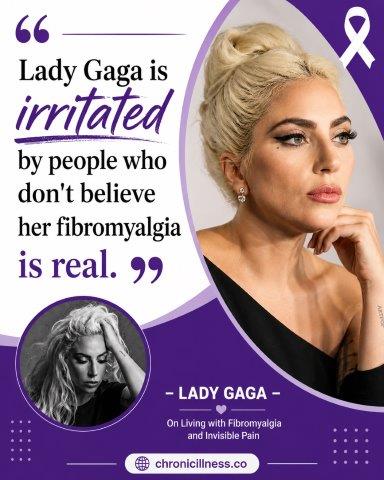
Fibromyalgia sits at a difficult intersection of medicine, perception, and public understanding. It is a condition that causes widespread pain, fatigue, and cognitive disruption, yet it often leaves no visible trace on the body. That gap between lived experience and outward appearance is where misunderstanding grows. When someone as globally recognized as Lady Gaga speaks about her fibromyalgia and expresses frustration toward those who doubt its reality, it highlights a broader issue that extends far beyond celebrity culture.
Her stance reflects something many people with chronic illness already know: the hardest part is not always the pain itself, but the need to constantly justify that pain to others.
This article explores fibromyalgia as a lived experience, the social challenges surrounding disbelief, why public figures shape awareness, and why validation matters deeply in invisible illness narratives.
Fibromyalgia as an Invisible but Very Real Condition
Fibromyalgia is a chronic disorder associated with widespread musculoskeletal pain and a heightened sensitivity to sensory input. However, reducing it to “just pain” oversimplifies a condition that affects nearly every aspect of daily functioning.
People living with fibromyalgia may experience:
- Persistent, widespread body pain
- Severe fatigue that is not relieved by rest
- Sleep disturbances and non-restorative sleep
- Cognitive difficulties often described as “fibro fog”
- Headaches and migraines
- Heightened sensitivity to temperature, light, sound, and pressure
What makes fibromyalgia particularly challenging is its variability. Symptoms can fluctuate daily or even hourly. A person may appear functional in one moment and be completely unable to perform basic tasks the next.
This inconsistency often leads to confusion among observers who expect chronic illness to behave in a predictable or visible way.
The Burden of Not Being Believed
One of the most emotionally difficult aspects of fibromyalgia is not the condition itself, but the reaction it often receives from others.
People with fibromyalgia frequently encounter skepticism such as:
- “But you don’t look sick.”
- “Everyone feels tired sometimes.”
- “It’s probably just stress.”
- “You’re too young for that.”
These statements, while often said without malicious intent, can create deep emotional harm. They imply that suffering must meet certain visible standards in order to be considered valid.
For someone already struggling with chronic pain and fatigue, having their reality questioned can intensify distress significantly.
The need to constantly explain, justify, or defend one’s condition adds an additional psychological burden on top of physical symptoms.
Lady Gaga and the Visibility of Chronic Illness
Lady Gaga’s openness about fibromyalgia has played a significant role in bringing attention to the condition. As a globally recognized artist, her experiences reach audiences who may have never encountered the term “fibromyalgia” before.
When she expresses frustration toward people who do not believe her illness is real, it reflects a shared frustration among millions of individuals who face similar disbelief in their everyday lives.
Her public presence helps shift fibromyalgia from an abstract medical term into something more human and relatable. Fans who may admire her for her performances are also introduced to the reality that chronic illness does not discriminate based on fame, success, or physical appearance.
This duality—public strength and private struggle—mirrors the experience of many people living with invisible conditions.
Why Invisible Illnesses Are So Often Misunderstood
Fibromyalgia belongs to a category often referred to as invisible illness. These are conditions that do not present outward signs easily recognized by others.
This invisibility creates a gap in understanding.
Appearance vs. Reality
Human perception tends to rely heavily on visual cues. When someone appears physically well, it is assumed they are well. This assumption breaks down in conditions like fibromyalgia, where external appearance does not reflect internal suffering.
A person may:
- Dress normally
- Speak clearly
- Smile in conversation
- Appear active for short periods
Yet still experience intense pain and exhaustion immediately afterward.
This disconnect leads others to underestimate the severity of the condition.
The Limitations of Traditional Proof
Many illnesses are validated through tests such as blood work, imaging, or physical markers. Fibromyalgia, however, does not always produce clear diagnostic results in standard medical testing.
This lack of a single definitive test has historically contributed to skepticism, even within parts of the medical community. While modern understanding has improved, outdated misconceptions still linger in public perception.
The absence of visible “proof” should not be mistaken for absence of illness, but this misunderstanding continues to fuel doubt.
Emotional Impact of Chronic Skepticism
Living with fibromyalgia already requires ongoing adaptation to pain, fatigue, and cognitive difficulty. When disbelief is added to that experience, the emotional impact becomes more complex.
Internal Doubt and Self-Questioning
Repeated skepticism from others can lead individuals to question their own experiences. They may begin to wonder whether they are exaggerating or misinterpreting their symptoms.
This internal conflict can be emotionally exhausting and may delay seeking proper support or accommodations.
Isolation and Withdrawal
When someone feels consistently misunderstood, they may begin to withdraw socially. Avoiding conversations about health can feel safer than repeatedly facing doubt or judgment.
Over time, this can lead to isolation, even from close friends and family.
Emotional Fatigue
Chronic illness already places strain on mental health, but defending one’s reality adds another layer of fatigue. The emotional labor of explaining invisible symptoms can become just as draining as the physical symptoms themselves.
The Role of Public Figures in Changing Perception
When celebrities like Lady Gaga speak openly about chronic illness, it can shift public understanding in meaningful ways.
Public figures influence perception in several ways:
Normalizing Conversation
When a widely admired figure discusses fibromyalgia, it becomes easier for others to talk about it without shame or hesitation. Visibility reduces stigma.
Creating Awareness
Many people first learn about fibromyalgia through media or celebrity interviews. Awareness is often the first step toward empathy and understanding.
Challenging Stereotypes
Public narratives often shape how illnesses are perceived. When someone famous experiences fibromyalgia, it challenges the misconception that chronic illness only affects certain “types” of people.
It becomes harder to dismiss something as imaginary when it is openly acknowledged by someone in the public eye.
The Reality Behind “Looking Fine”
One of the most misunderstood aspects of fibromyalgia is how it can coexist with a seemingly normal appearance.
A person may look composed while experiencing:
- Intense muscle pain
- Burning or stabbing sensations in the body
- Extreme fatigue that feels overwhelming
- Mental cloudiness affecting concentration and memory
The ability to mask symptoms in public does not mean symptoms are not present.
Many individuals develop coping mechanisms that allow them to function temporarily in social or professional settings, but this often comes at the cost of later exhaustion or flare-ups.
The phrase “you look fine” becomes misleading because it measures only appearance, not experience.
The Complexity of Pain Without Visible Cause
Pain is a deeply personal and subjective experience. Unlike measurable external injuries, chronic pain conditions like fibromyalgia rely on patient reporting and clinical evaluation rather than visible markers.
This creates challenges in understanding, but it does not diminish legitimacy.
Modern research suggests that fibromyalgia involves altered pain processing in the nervous system. The body may interpret normal signals as painful or amplify existing sensations.
In this context, the absence of visible damage does not mean the absence of dysfunction.
Why Validation Matters More Than People Realize
For individuals living with fibromyalgia, being believed is not a minor detail. It can significantly affect emotional well-being and quality of life.
Validation helps in several ways:
Reducing Psychological Stress
When someone’s experience is acknowledged, it reduces the burden of self-doubt and emotional strain.
Encouraging Treatment and Support
Belief from others can encourage individuals to seek medical care, therapy, and lifestyle adjustments without fear of dismissal.
Strengthening Relationships
Understanding builds stronger personal relationships. When friends or family accept the reality of the condition, communication becomes easier and more compassionate.
Living With an Unpredictable Condition
Fibromyalgia is not static. Its symptoms fluctuate, sometimes unpredictably, which makes daily life difficult to plan.
Someone may wake up feeling relatively functional and later experience a sudden increase in pain or fatigue. This unpredictability affects:
- Work schedules
- Social commitments
- Physical activity
- Emotional stability
Living with such variability requires constant adjustment and energy management.
To outsiders, these changes may seem inconsistent. To those living with fibromyalgia, they are part of a daily balancing act.
Beyond Misunderstanding: Building Empathy
The conversation around fibromyalgia is not only about medical recognition but also about empathy. Understanding does not require firsthand experience of pain, but it does require willingness to accept that others’ experiences are valid even when they are not visible.
Empathy in this context involves:
- Listening without immediate judgment
- Avoiding assumptions based on appearance
- Accepting variability in symptoms
- Respecting limitations without requiring proof
Small shifts in attitude can significantly reduce the emotional burden on those living with chronic illness.
The Importance of Continuing Awareness
Despite growing recognition, fibromyalgia is still widely misunderstood. Continued awareness helps bridge the gap between medical knowledge and public perception.
As more people speak openly about their experiences, including high-profile individuals like Lady Gaga, the narrative slowly shifts from skepticism toward understanding.
Awareness does not eliminate the condition, but it changes how people living with it are treated and perceived.
Conclusion: Belief as a Form of Support
Lady Gaga’s frustration with disbelief surrounding fibromyalgia reflects a broader truth about invisible illness. The challenge is not only managing chronic pain but also navigating a world that often struggles to accept what it cannot see.
Fibromyalgia is real, complex, and deeply disruptive to daily life. While science continues to study its causes and treatments, one of the simplest and most powerful forms of support already exists: believing those who live with it.
Validation does not require full understanding. It requires openness to the possibility that someone’s internal experience is valid even when it does not match external appearance.
In a world where invisible illness is often misunderstood, belief becomes more than agreement—it becomes compassion in action.

For More Information Related to Fibromyalgia Visit below sites:
References:
Join Our Whatsapp Fibromyalgia Community
Click here to Join Our Whatsapp Community
Official Fibromyalgia Blogs
Click here to Get the latest Fibromyalgia Updates
Fibromyalgia Stores
Comments
Post a Comment