“I Am Disabled, I Fall Sometimes”: Selma Blair, Chronic Illness, and the Reality of Living With Invisible Disability
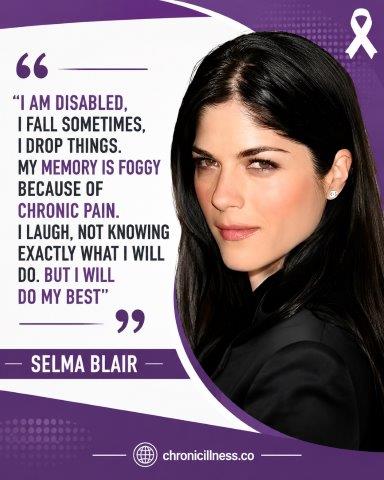
Public conversations around disability and chronic illness have changed significantly in recent years, largely because well-known individuals have begun speaking more openly about their lived experiences. Among those voices, Selma Blair stands out for her honesty about the daily realities of living with a progressive neurological condition. Her words about falling, dropping things, memory fog, and continuing to try her best reflect not only her personal journey but also the broader experience of millions of people living with invisible disabilities.
The statement attributed to her—describing disability, physical instability, cognitive fog, and emotional resilience—captures something that medical descriptions often fail to express: the human side of chronic illness. Beyond diagnoses and clinical definitions, there is a lived reality shaped by unpredictability, adaptation, and persistence.
This article explores what her message represents, how chronic illness affects daily life, and why visibility from public figures plays such an important role in reshaping how society understands disability.
Understanding Disability Beyond Appearance
One of the most persistent misunderstandings about disability is the assumption that it is always visible. Many people expect disability to be immediately obvious—such as the use of a wheelchair, a cast, or another clear physical indicator. However, a large portion of disabilities are invisible, fluctuating, or episodic.
Invisible disabilities can include neurological conditions, autoimmune diseases, chronic pain disorders, and cognitive impairments. These conditions may not be noticeable at a glance, but they can significantly impact mobility, memory, coordination, energy levels, and emotional well-being.
The experience described in Selma Blair’s statement reflects this invisible reality. Falling unexpectedly, dropping objects, and experiencing memory fog are not simply minor inconveniences—they are symptoms that can interrupt independence and daily functioning in profound ways.
What makes invisible disabilities especially challenging is that they often exist in tension with outward appearance. A person may look physically well while internally managing symptoms that require constant adaptation and energy management.
Selma Blair and Her Public Health Journey
Selma Blair is widely recognized for her work in film and television, but in recent years she has also become known for openly discussing her health condition. She revealed that she lives with multiple sclerosis (MS), a chronic neurological disorder that affects the central nervous system, including the brain and spinal cord.
Multiple sclerosis is a condition in which the immune system mistakenly attacks the protective covering of nerve fibers. This disrupts communication between the brain and the rest of the body, leading to a wide range of symptoms that can vary significantly from person to person.
For some, MS causes mild symptoms that come and go. For others, it can lead to significant mobility challenges, cognitive changes, fatigue, and loss of coordination. The unpredictable nature of the condition is one of its most defining characteristics.
Blair’s decision to speak publicly about her condition brought attention not only to MS itself but also to the broader experience of living with a fluctuating and often misunderstood illness. Her openness helped shift public perception from abstract medical terminology to real human experience.
The Reality of Living With Multiple Sclerosis
Multiple sclerosis is not a static condition. It often changes over time, and symptoms can vary from day to day or even hour to hour. This unpredictability can make it difficult for individuals to plan activities, maintain routines, or predict their physical capabilities.
Common symptoms include:
- Muscle weakness
- Balance issues
- Coordination difficulties
- Fatigue that does not improve with rest
- Vision problems
- Cognitive challenges such as memory fog
- Numbness or tingling sensations
- Difficulty with fine motor skills
The experiences described in Selma Blair’s statement—falling, dropping things, and memory difficulties—are consistent with the kinds of neurological disruptions that can occur in MS. These symptoms are not simply “having an off day.” They are part of a complex condition that affects how the nervous system communicates with the body.
What makes MS particularly challenging is that symptoms can fluctuate. A person may feel relatively stable one day and significantly impaired the next. This variability can make it difficult for others to understand the condition, especially when symptoms are not consistently visible.
The Emotional Weight of Invisible Symptoms
Living with a chronic neurological condition is not only a physical experience—it is also an emotional one. The unpredictability of symptoms can create a sense of uncertainty that affects confidence, independence, and emotional stability.
For example, falling unexpectedly or dropping objects in public can be emotionally distressing. These moments may lead to feelings of embarrassment, frustration, or vulnerability. Over time, individuals may begin to adjust their behavior to avoid situations where symptoms could become noticeable.
Memory fog, another commonly reported symptom in neurological conditions, can also have a significant emotional impact. Difficulty recalling words, focusing on tasks, or organizing thoughts can affect work, communication, and self-esteem.
Despite these challenges, many individuals develop resilience through adaptation. They learn to pace themselves, prioritize essential tasks, and accept help when needed. The emotional strength required to navigate such uncertainty is often overlooked in traditional discussions about disability.
Redefining Strength and Resilience
One of the most important cultural shifts happening in discussions about disability is the redefinition of strength. Traditionally, strength has often been associated with physical endurance, independence, and the ability to push through difficulty without visible struggle.
However, living with a chronic condition requires a different kind of strength—one based on adaptation, patience, and persistence.
Selma Blair’s message reflects this shift. When she speaks about falling, forgetting, laughing, and still doing her best, she is describing a form of resilience that does not rely on perfection or consistency. Instead, it acknowledges limitation while continuing forward despite it.
This type of resilience is not about ignoring difficulty. It is about acknowledging reality and continuing to engage with life in whatever capacity is possible on any given day.
The Social Misunderstanding of Chronic Illness
One of the biggest challenges faced by individuals with chronic illness is social misunderstanding. Because symptoms are often invisible or fluctuating, others may misinterpret the condition or underestimate its severity.
Common misconceptions include:
- Assuming someone is exaggerating symptoms
- Believing that rest alone should resolve chronic fatigue
- Expecting consistent physical capability
- Misinterpreting cognitive symptoms as carelessness
- Viewing disability only in terms of visible mobility aids
These misunderstandings can lead to frustration for individuals living with chronic illness. They may feel pressured to explain or justify their symptoms repeatedly, even in situations where they are already managing significant physical or emotional strain.
Public figures who share their experiences help challenge these misconceptions by demonstrating that chronic illness can affect anyone, regardless of success, appearance, or lifestyle.
The Importance of Cognitive Symptoms in Disability Awareness
Physical symptoms of chronic illness are often easier for others to recognize than cognitive symptoms. However, cognitive changes can be just as impactful.
Memory fog, difficulty concentrating, and slowed processing can affect every aspect of life, including communication, work performance, and daily decision-making.
When Selma Blair describes memory fog, she highlights an aspect of chronic illness that is often overlooked. Cognitive symptoms are not simply “forgetfulness”—they are neurological effects that can disrupt mental clarity and create frustration in everyday tasks.
Recognizing cognitive symptoms as legitimate components of disability is essential for building a more accurate understanding of chronic illness.
Living With Uncertainty: The Daily Experience
One of the most difficult aspects of chronic illness is uncertainty. Unlike conditions with predictable progression, many neurological disorders fluctuate in intensity and impact.
This means that planning daily life can be complex. A person may wake up feeling capable, only to experience a sudden increase in symptoms later in the day. As a result, flexibility becomes essential.
Daily life may involve:
- Adjusting expectations based on energy levels
- Prioritizing essential tasks over optional ones
- Taking breaks more frequently
- Using mobility or cognitive aids when necessary
- Managing unpredictable symptom changes
This constant adjustment requires significant mental effort. It is not simply about physical limitation—it is about continuously recalibrating life around changing conditions.
Representation and Why It Matters
When public figures openly discuss disability, they contribute to broader cultural understanding. Representation helps normalize experiences that are often hidden or misunderstood.
Seeing someone speak openly about falling, memory fog, or physical limitations can help others recognize that these experiences are part of real, lived conditions—not isolated or rare occurrences.
Representation also helps reduce stigma. When disability is visible in public discourse, it becomes harder to dismiss or minimize.
For individuals living with similar conditions, this visibility can be validating. It can reduce feelings of isolation and provide a sense of shared experience.
Shifting the Narrative Around Disability
For a long time, disability narratives in media often focused on either limitation or inspiration. However, lived experience is far more nuanced than either extreme.
Disability is not defined solely by struggle or triumph. It is defined by daily experience, adaptation, and individuality.
Selma Blair’s message contributes to a more balanced narrative—one that acknowledges difficulty without reducing a person to their condition. It emphasizes effort, honesty, and persistence without framing disability as something to overcome in a simplistic way.
This shift is important because it allows individuals with chronic illness to be seen as whole people rather than symbols or stereotypes.
Conclusion: Living Fully Within Limitations
The words shared by Selma Blair reflect a reality experienced by many people living with chronic illness and neurological conditions. Falling, dropping things, memory fog, and unpredictable symptoms are not just medical details—they are lived experiences that shape daily life.
Yet within that reality is also resilience. Continuing to move forward, finding humor in difficult moments, and doing one’s best despite uncertainty reflects a form of strength that is often overlooked.
Chronic illness does not define a person’s entire identity, but it does shape how they navigate the world. Understanding this complexity is essential for building a more compassionate and informed society.
Ultimately, visibility matters. When disability is spoken about openly and honestly, it becomes easier for others to understand, support, and respect those living with it.

For More Information Related to Fibromyalgia Visit below sites:
References:
Join Our Whatsapp Fibromyalgia Community
Click here to Join Our Whatsapp Community
Official Fibromyalgia Blogs
Click here to Get the latest Fibromyalgia Updates
Fibromyalgia Stores
Comments
Post a Comment