Introduction
Fibromyalgia is a chronic condition known for causing widespread pain, fatigue, tenderness, and heightened sensitivity throughout the body. While many people associate fibromyalgia with generalized discomfort, certain areas tend to become especially painful. One of the most commonly affected regions is the hips.
Hip pain in fibromyalgia can range from mild soreness to severe, debilitating discomfort that interferes with walking, sitting, sleeping, and everyday movement. For some individuals, the pain may feel deep inside the joint, while others experience burning, stiffness, tenderness, or aching around the surrounding muscles and tissues.
Unlike injuries or arthritis, hip pain in fibromyalgia often occurs because of changes in how the nervous system processes pain signals. The pain is real, but the cause may not always appear on scans or medical tests. This can make fibromyalgia-related hip pain frustrating and misunderstood.
Understanding why hip pain occurs in fibromyalgia is important for better symptom management and improved quality of life. From central sensitization and muscle tension to poor sleep and stress, several factors may contribute to discomfort in the hips. Learning these causes can help individuals recognize triggers and find supportive strategies that reduce pain and improve mobility.
Why Hip Pain Is Common in Fibromyalgia
The hips play an important role in supporting body movement and weight distribution. Every time a person stands, walks, bends, climbs stairs, or changes position, the hip joints and surrounding muscles are activated.
Because fibromyalgia affects pain processing, muscles, connective tissues, and nervous system responses, areas under frequent use—like the hips—often become painful.
Hip discomfort may occur in one side or both sides of the body. Some people notice constant pain, while others experience flare-ups that come and go.
Pain may feel:
- Aching
- Burning
- Sharp
- Throbbing
- Tender
- Stiff
- Deep or radiating
The intensity often varies depending on stress, activity level, sleep quality, and overall symptom flare-ups.
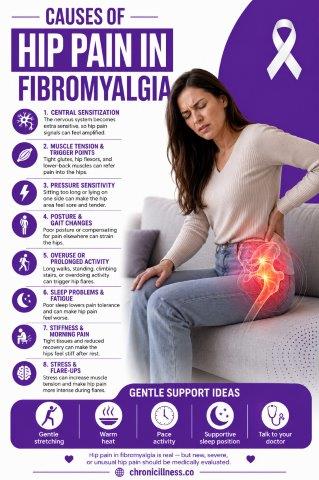
Central Sensitization: The Nervous System Becomes Overly Sensitive
One of the leading explanations for hip pain in fibromyalgia is central sensitization.
Central sensitization occurs when the nervous system becomes highly reactive and over-sensitive to pain signals. In people with fibromyalgia, the brain and spinal cord process pain differently than usual.
This means ordinary sensations may feel much more painful.
For example:
- Mild pressure on the hips may hurt.
- Sitting in one position too long can trigger discomfort.
- Everyday movement may feel unusually painful.
The nervous system essentially amplifies signals, making the brain interpret normal sensations as pain.
Why This Affects the Hips
The hips are constantly involved in daily activity, meaning they experience frequent movement and pressure. Since fibromyalgia increases pain sensitivity, this area may become especially vulnerable.
Even when there is no visible injury or inflammation, hip pain can still feel severe because of altered nervous system processing.
This is one reason why fibromyalgia-related pain is real, even if imaging tests appear normal.
Muscle Tension and Trigger Points
Muscle tension is another major contributor to hip pain in fibromyalgia.
People with fibromyalgia often experience tight muscles and sensitive trigger points throughout the body. The muscles surrounding the hips—including the glutes, hip flexors, pelvis, and lower back—can become tense or overworked.
How Tight Muscles Cause Hip Pain
When muscles remain tight for long periods, they can place pressure on nearby joints and tissues.
Tension in the following muscles may contribute to hip pain:
- Glute muscles
- Hip flexors
- Lower back muscles
- Pelvic muscles
- Thigh muscles
Pain may not always stay in one area. Tight muscles often create referred pain, meaning discomfort spreads to nearby regions.
For example, lower back tension may radiate into the hips, creating aching or burning sensations.
Trigger points—highly sensitive areas in muscles—can also intensify discomfort.
Symptoms of Muscle-Related Hip Pain
People often describe this type of pain as:
- Tightness
- Tenderness
- Deep aching
- Sharp discomfort during movement
- Muscle soreness
Gentle stretching and movement may help reduce stiffness over time.
Pressure Sensitivity and Tenderness
Fibromyalgia often causes heightened sensitivity to physical pressure.
For many people, even mild contact can feel painful. This increased tenderness may make the hips feel sore after:
- Sitting too long
- Sleeping on one side
- Leaning against hard surfaces
- Standing for extended periods
The hips naturally experience pressure due to body weight and positioning, making them particularly sensitive areas during fibromyalgia flare-ups.
Why Sleeping Can Become Painful
Many people with fibromyalgia wake up with hip pain because prolonged pressure on one side creates tenderness.
If someone sleeps primarily on one hip, discomfort may worsen overnight.
Some individuals benefit from supportive pillows between the knees or alternative sleep positions that reduce strain on the hips.
Posture and Gait Changes
Chronic pain often changes how people move.
When one area hurts, the body naturally compensates to avoid discomfort. Unfortunately, these compensation patterns sometimes place extra stress on the hips.
Poor Posture Can Increase Strain
Poor posture may affect alignment and muscle balance, causing pressure on the hips.
Examples include:
- Slouching
- Uneven standing positions
- Favoring one side of the body
- Leaning to reduce discomfort elsewhere
Over time, these habits may worsen hip pain.
Gait Changes in Fibromyalgia
Some people develop altered walking patterns due to pain or fatigue.
Walking differently to protect painful muscles or joints may unintentionally strain the hips.
This can lead to:
- Muscle imbalance
- Increased tension
- Reduced flexibility
- More discomfort during movement
Improving posture and body mechanics may help reduce unnecessary strain.
Overuse or Prolonged Activity
Although movement is important for fibromyalgia management, overdoing physical activity can trigger hip pain flare-ups.
The body in fibromyalgia tends to have reduced recovery capacity, meaning muscles and tissues may become overwhelmed more easily.
Activities That May Trigger Hip Pain
Certain movements can place stress on the hips, including:
- Long walks
- Standing for long periods
- Climbing stairs
- Carrying heavy items
- Intense exercise
- Repetitive movements
Even enjoyable activities may trigger pain if energy levels are exceeded.
The Importance of Pacing
Many healthcare providers recommend activity pacing, which means balancing movement with rest.
Rather than pushing through exhaustion, pacing helps reduce overexertion and prevent symptom flares.
This approach may involve:
- Taking breaks
- Dividing tasks into smaller steps
- Alternating activity with rest
- Avoiding sudden increases in exercise
Gentle consistency is often more effective than intense effort.
Sleep Problems and Fatigue
Sleep problems are one of the biggest challenges in fibromyalgia and can directly worsen hip pain.
Many people struggle with:
- Insomnia
- Interrupted sleep
- Restless sleep
- Non-restorative sleep
Poor sleep lowers the body’s pain tolerance, making discomfort feel more intense.
How Sleep Affects Pain
The body repairs muscles and tissues during sleep. When sleep quality suffers, pain often increases.
Fatigue also contributes to:
- Muscle tightness
- Reduced endurance
- Increased soreness
- Greater sensitivity to pressure
This creates a difficult cycle:
Poor sleep increases pain, and pain interferes with sleep.
Breaking this cycle often becomes a key part of symptom management.
Morning Stiffness and Reduced Recovery
Many people with fibromyalgia experience significant morning stiffness, especially in the hips.
After remaining still overnight, muscles and connective tissues may tighten, making movement painful first thing in the morning.
Common Morning Symptoms
Hip stiffness may include:
- Difficulty standing up
- Aching after waking
- Reduced flexibility
- Pain during first movements of the day
This stiffness usually improves somewhat after gentle movement.
However, overactivity too early can sometimes worsen discomfort.
Slow stretching and light movement may help the body adjust more comfortably.
Stress and Fibromyalgia Flare-Ups
Stress plays a major role in fibromyalgia symptoms.
Emotional stress can increase nervous system sensitivity, muscle tension, and inflammation-related responses that contribute to pain.
Why Stress Makes Hip Pain Worse
When the body is stressed, muscles tend to tighten automatically.
This tension often affects:
- Hips
- Lower back
- Neck
- Shoulders
Stress may also worsen sleep problems, creating a chain reaction that intensifies pain.
During fibromyalgia flare-ups, hip discomfort may become more severe even without increased physical activity.
Managing emotional stress may help reduce pain intensity over time.
Conditions That May Occur Alongside Fibromyalgia
Although fibromyalgia itself can cause hip pain, some individuals may also develop additional conditions that affect the hips.
These include:
Bursitis
Hip bursitis occurs when fluid-filled sacs near the hip joint become irritated or inflamed.
Symptoms may include:
Arthritis
Some individuals have both fibromyalgia and arthritis, making hip pain more complicated.
Sciatica
Irritation of the sciatic nerve can cause pain radiating from the lower back into the hips and legs.
Because symptoms overlap, medical evaluation is important when pain changes suddenly or becomes severe.
Gentle Support Ideas for Hip Pain Relief
Although there is no cure for fibromyalgia, many people find relief through supportive strategies.
Gentle Stretching
Light stretching may improve flexibility and reduce muscle tightness.
Helpful stretches often target:
- Hip flexors
- Hamstrings
- Glutes
- Lower back
Gentle movement is usually better tolerated than intense stretching.
Warm Heat Therapy
Warmth can relax tight muscles and reduce discomfort.
Options include:
- Heating pads
- Warm baths
- Heated blankets
- Warm compresses
Heat may provide temporary relief during flare-ups.
Pace Your Activity
Avoiding overexertion is essential.
Try to:
- Alternate activity and rest
- Avoid pushing through severe fatigue
- Listen to your body’s limits
Supportive Sleep Positions
Sleeping with extra support may reduce pressure on painful hips.
Helpful options include:
- Pillow between the knees
- Cushion under the knees while sleeping on the back
- Softer mattress support when needed
Speak With a Healthcare Professional
Persistent or unusual hip pain should always be discussed with a healthcare provider.
Medical guidance can help rule out other causes and create a personalized treatment plan.
When Hip Pain Needs Medical Attention
Fibromyalgia pain is common, but certain symptoms should not be ignored.
Seek medical evaluation if hip pain becomes:
- Sudden or severe
- Sharp and persistent
- Accompanied by swelling
- Associated with fever
- Causing inability to walk
- Different from usual fibromyalgia pain
New or worsening pain deserves proper assessment.
Conclusion
Hip pain in fibromyalgia is common and often deeply disruptive to daily life. While the discomfort may feel frustrating or confusing, understanding the causes can make symptom management easier.
Central sensitization, muscle tension, pressure sensitivity, poor posture, overuse, fatigue, sleep disruption, stiffness, and stress all play important roles in hip pain. Because fibromyalgia affects the nervous system’s ability to process pain signals, even normal movement or mild pressure may feel significantly amplified.
The good news is that many people find relief through gentle stretching, heat therapy, activity pacing, better sleep habits, and stress management. Small adjustments can gradually improve comfort and mobility.
Most importantly, hip pain in fibromyalgia is real. Validation, proper medical support, and a personalized management plan can help individuals better navigate symptoms and maintain a meaningful quality of life.

For More Information Related to Fibromyalgia Visit below sites:
References:
Join Our Whatsapp Fibromyalgia Community
Click here to Join Our Whatsapp Community
Official Fibromyalgia Blogs
Click here to Get the latest Fibromyalgia Updates
Fibromyalgia Stores
Comments
Post a Comment