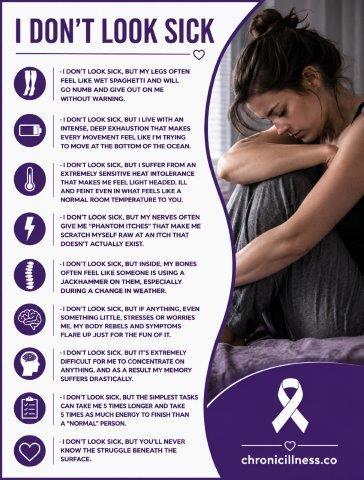
One of the hardest parts of living with a chronic illness is hearing the phrase:
“But you don’t look sick.”
At first glance, it may seem like a harmless comment. Sometimes it is even meant as reassurance or kindness. But for people living with invisible illnesses such as fibromyalgia, chronic fatigue syndrome, autoimmune disease, lupus, multiple sclerosis, Ehlers-Danlos syndrome, arthritis, migraine disorders, or nerve conditions, those words can feel deeply painful.
Because the truth is this:
Many people with chronic illness do not look sick.
They look normal.
They smile.
They go to work.
They show up to events.
They take care of responsibilities.
But what most people never see is the silent battle happening underneath the surface.
Invisible illness means carrying symptoms others cannot see, understand, or fully imagine.
And for millions of people, the hardest struggle is not just managing symptoms—it is constantly trying to explain suffering that no one else can see.
The Reality of Invisible Illness
When people think of sickness, they often imagine visible signs.
A cast.
A wheelchair.
Bandages.
Hospital beds.
Physical limitations that are obvious.
But many chronic illnesses do not look dramatic from the outside.
Someone can appear healthy while internally experiencing:
- Severe pain
- Muscle weakness
- Nerve dysfunction
- Fatigue
- Cognitive issues
- Temperature sensitivity
- Dizziness
- Mobility problems
Invisible illness often means looking “fine” while feeling anything but fine.
This disconnect creates misunderstanding.
And misunderstanding creates loneliness.
People begin feeling unseen.
Not because they are unwilling to explain—but because invisible suffering is difficult for others to fully grasp.
“My Legs Feel Like Wet Spaghetti”
One difficult reality many people with chronic illness experience is sudden weakness.
Some describe their legs as feeling like “wet spaghetti.”
The sensation can feel frightening.
Walking suddenly becomes difficult.
Legs may feel:
- Weak
- Heavy
- Unstable
- Numb
- Shaky
For some people, symptoms happen unexpectedly.
One moment they are standing normally.
The next moment, their body feels unreliable.
Why Weakness Happens
Conditions affecting the nervous system, muscles, or chronic pain pathways may disrupt communication between the brain and body.
Fibromyalgia, autoimmune conditions, neurological disorders, and fatigue syndromes can all contribute to feelings of weakness.
Even when someone appears physically capable, their body may feel completely depleted.
This unpredictability creates anxiety.
Many people fear falling, collapsing, or being unable to complete everyday tasks.
Exhaustion That Feels Impossible to Explain
Everyone gets tired.
But chronic illness fatigue is something entirely different.
Many people describe it as deep exhaustion that rest does not fix.
Imagine feeling like every movement requires enormous effort.
Like walking through heavy water.
Or moving at the bottom of the ocean.
Simple activities suddenly feel overwhelming.
Tasks such as:
- Showering
- Cooking
- Grocery shopping
- Folding laundry
- Responding to messages
Can feel physically exhausting.
And because fatigue is invisible, others may not realize how hard someone is trying.
Why Chronic Fatigue Feels Different
This is not laziness.
And it is not poor motivation.
Chronic fatigue often involves nervous system dysfunction, inflammation, poor sleep quality, pain, or energy-processing issues.
People may wake up feeling exhausted despite sleeping.
Some feel drained before the day even begins.
Others carefully ration energy because they know overdoing it may trigger worsening symptoms later.
Heat Intolerance and Temperature Sensitivity
Something many people never associate with chronic illness is temperature intolerance.
For some individuals, heat feels unbearable.
Even temperatures that seem normal to others may trigger symptoms such as:
- Dizziness
- Nausea
- Faintness
- Increased fatigue
- Weakness
- Lightheadedness
A warm room, sunlight, shower, or humid environment may suddenly feel overwhelming.
Why Heat Feels So Intense
The nervous system helps regulate body temperature.
Some chronic illnesses disrupt this regulation.
The body may struggle to cool itself properly.
This can create symptoms that feel extreme and difficult to explain.
People often hear:
“But it’s not even hot.”
Yet for someone with chronic illness, it feels unbearable.
This disconnect can feel isolating.
Phantom Itches and Strange Nerve Sensations
One symptom many people hesitate to talk about is unusual nerve sensations.
Some individuals experience what feels like:
- Crawling skin
- Phantom itching
- Burning sensations
- Tingling
- Pins and needles
- Electric shocks
These symptoms may feel very real even when there is no visible explanation.
Someone may scratch intensely, only to realize there is no rash or skin irritation.
Why Nerve Symptoms Happen
Nervous system dysfunction is common in many chronic illnesses.
Pain and sensory signals may become misfired or exaggerated.
The result is discomfort that others cannot see.
And because symptoms are invisible, many people feel embarrassed explaining them.
But these experiences are more common than most realize.
Pain That Feels Deep in the Bones
Chronic illness pain is often difficult to describe.
Some people say it feels like:
- Burning muscles
- Deep aching
- Crushing pressure
- Joint stiffness
- Electric pain
- Bone-deep discomfort
Many explain it as feeling like something is vibrating, drilling, or pounding deep inside the body.
Weather changes often worsen symptoms.
Rain, humidity, cold temperatures, or pressure shifts may trigger flare-ups.
Why Weather Affects Symptoms
Although research is ongoing, many chronic illness communities report symptom increases during weather changes.
Possible reasons may include:
- Pressure shifts
- Muscle tension
- Increased inflammation
- Nervous system sensitivity
The body sometimes reacts before the weather forecast even changes.
Stress Makes Symptoms Worse
Stress affects everyone.
But chronic illness often amplifies its effects.
Even small stressors may trigger symptom flare-ups.
People may notice worsening symptoms after:
- Arguments
- Financial worries
- Emotional overwhelm
- Busy schedules
- Lack of rest
Stress can increase:
The Frustration of “Paying for Stress”
Many people feel frustrated because their body reacts strongly to emotional strain.
Something small may trigger days of recovery.
This unpredictability makes life difficult to plan.
And emotionally exhausting.
Brain Fog and Memory Problems
One of the most misunderstood symptoms of invisible illness is cognitive dysfunction.
Many people experience what is often called brain fog.
Symptoms may include:
- Forgetting words
- Losing focus
- Trouble concentrating
- Memory lapses
- Mental exhaustion
- Difficulty multitasking
People sometimes feel embarrassed or ashamed.
Especially in work environments.
Others may misunderstand cognitive struggles as laziness or carelessness.
But brain fog is real.
Why Concentration Becomes Difficult
Pain consumes mental energy.
Poor sleep worsens concentration.
Fatigue slows processing.
The brain becomes overloaded.
This makes thinking clearly much harder than it used to be.
Why Basic Tasks Take So Much Longer
One painful reality of chronic illness is realizing how exhausting basic life tasks become.
Many people notice even simple responsibilities suddenly require much more energy.
Tasks may take:
- More planning
- More recovery time
- More effort
- More mental focus
What once took 20 minutes may now take two hours.
Some people compare it to living life with a battery that never fully charges.
The Spoon Theory of Energy
Many people with chronic illness describe energy through something called spoon theory.
Imagine starting each day with limited energy “spoons.”
Every activity costs spoons.
Showering.
Cooking.
Working.
Cleaning.
Socializing.
Eventually, energy runs out.
And once it is gone, recovery becomes necessary.
The Emotional Weight of Looking “Fine”
Perhaps one of the hardest realities is feeling misunderstood.
People often hear comments like:
- “But you look healthy.”
- “You don’t seem sick.”
- “Maybe you’re just stressed.”
- “You were okay yesterday.”
While often well-intentioned, these comments can feel invalidating.
Because looking okay and feeling okay are very different things.
Many people become experts at masking symptoms.
They smile through pain.
Hide exhaustion.
Push through discomfort.
Then collapse privately afterward.
The Cost of Masking
Constantly pretending to be okay is exhausting.
Some people stop talking about symptoms because they feel dismissed.
Others fear judgment.
Eventually, loneliness sets in.
Because invisible suffering often feels invisible emotionally too.
What People With Invisible Illness Wish Others Understood
If there is one thing many people living with chronic illness wish others knew, it is this:
Not looking sick does not mean someone is healthy.
Many people are fighting invisible battles every single day.
They are trying harder than anyone realizes.
Support often looks simple.
Believe them.
Listen without judgment.
Offer compassion.
Avoid minimizing symptoms.
And remember:
No one chooses chronic illness.
How to Support Someone With Invisible Illness
If someone you love lives with chronic illness, small changes in how you respond can make a huge difference.
Believe Their Experience
You do not have to fully understand to be supportive.
Belief matters.
Avoid Comparing
Avoid phrases like:
“Everyone gets tired.”
Symptoms are different from everyday discomfort.
Offer Patience
Plans may change unexpectedly.
Energy levels fluctuate.
Flexibility helps.
Ask What They Need
Sometimes support means simply asking:
“How can I help?”
Compassion matters more than perfect understanding.
Final Thoughts
Invisible illness teaches people how to survive battles no one else can see.
The weakness.
The exhaustion.
The pain.
The strange symptoms.
The emotional exhaustion.
The grief.
And yet, despite it all, millions continue showing up every day.
Even when it is hard.
Even when they feel misunderstood.
If you live with chronic illness and often hear “you don’t look sick,” know this:
Your pain is real.
Your struggle matters.
And you never have to prove your suffering to deserve compassion or understanding.

For More Information Related to Fibromyalgia Visit below sites:
References:
Join Our Whatsapp Fibromyalgia Community
Click here to Join Our Whatsapp Community
Official Fibromyalgia Blogs
Click here to Get the latest Fibromyalgia Updates
Fibromyalgia Stores
Comments
Post a Comment