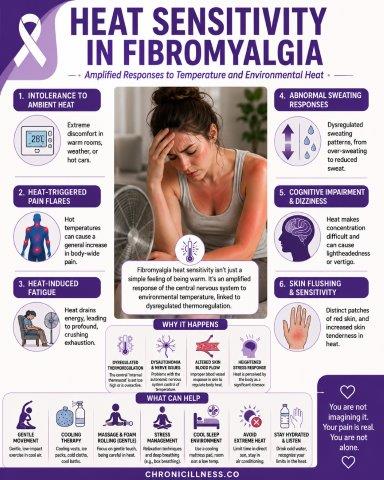
Fibromyalgia is a chronic condition known for widespread pain, fatigue, sleep disturbances, and sensory sensitivity. While many people associate fibromyalgia symptoms with muscle aches and exhaustion, one lesser-known but highly disruptive challenge is heat sensitivity. For many individuals living with fibromyalgia, hot temperatures can trigger severe discomfort, increase pain levels, worsen fatigue, and make daily activities difficult to manage.
Heat sensitivity in fibromyalgia goes beyond simply feeling uncomfortable in warm weather. Many people experience amplified reactions to heat because the body struggles to regulate temperature effectively. A warm room, direct sunlight, humid weather, or even everyday activities in a heated environment can quickly lead to symptom flare-ups.
Understanding how heat affects fibromyalgia can help individuals better manage symptoms, avoid unnecessary triggers, and improve overall comfort during warmer months or hot indoor conditions.
What Is Heat Sensitivity in Fibromyalgia?
Heat sensitivity in fibromyalgia refers to an abnormal or intensified reaction to warm temperatures. While most people may feel slightly uncomfortable in heat, individuals with fibromyalgia often experience much stronger responses.
The body may struggle to adapt to environmental temperature changes, making heat feel overwhelming and physically exhausting.
Many people describe the sensation as though their body becomes overloaded in hot conditions. Symptoms may suddenly intensify, leading to increased pain, dizziness, sweating abnormalities, and mental exhaustion.
Heat sensitivity is believed to be linked to abnormalities in the nervous system, particularly involving pain processing and temperature regulation.
Why Heat Affects People With Fibromyalgia More Intensely
Fibromyalgia affects how the nervous system processes sensory information. This includes pain signals, touch, pressure, and temperature.
Researchers believe the condition may interfere with the body's natural thermostat, making it harder to maintain internal temperature balance.
Several biological factors may contribute to heat sensitivity in fibromyalgia.
Dysregulated Thermoregulation
Thermoregulation is the body's ability to maintain a stable internal temperature.
In fibromyalgia, this process may become disrupted, causing the body to react abnormally to heat exposure. Even moderate warmth may feel extreme.
Some individuals report feeling overheated quickly, while others alternate between feeling excessively hot and cold.
Nervous System Dysfunction
The autonomic nervous system controls involuntary body functions such as heart rate, sweating, blood pressure, and temperature control.
People with fibromyalgia often experience nervous system irregularities, which may make it difficult for the body to respond appropriately to environmental heat.
This dysfunction may increase sensitivity and worsen discomfort.
Heightened Stress Response
Heat places physical stress on the body. Since fibromyalgia already involves increased nervous system sensitivity, the body may perceive heat as a major stressor.
This can trigger symptom flare-ups, increase inflammation-like sensations, and worsen overall physical discomfort.
Changes in Blood Flow
Some researchers believe altered blood circulation may contribute to heat sensitivity in fibromyalgia.
Blood vessels may not regulate body temperature efficiently, leading to overheating, flushing, or unusual skin sensations.
Intolerance to Ambient Heat
One of the earliest signs of fibromyalgia-related heat sensitivity is intolerance to ambient heat.
Many people notice they become uncomfortable much faster than others in environments such as:
- Warm rooms
- Hot weather
- Heated vehicles
- Humid climates
- Poorly ventilated spaces
Even short periods of heat exposure can feel unbearable.
Someone with fibromyalgia may begin sweating excessively, feel dizzy, develop headaches, or notice increasing pain after only a brief time in a hot environment.
Everyday Situations That May Trigger Heat Intolerance
Simple situations may become physically draining, including:
- Standing outdoors in summer
- Cooking in a warm kitchen
- Taking hot showers
- Exercising in heated environments
- Sleeping in warm bedrooms
This sensitivity often forces people to carefully plan daily routines around temperature changes.
Heat-Triggered Pain Flares
Pain is one of the defining symptoms of fibromyalgia, and heat can significantly intensify it.
Many individuals report that hot temperatures trigger widespread body pain or make existing discomfort worse.
How Heat Can Increase Pain
Heat may contribute to:
- Increased muscle tenderness
- Heightened nerve sensitivity
- Body-wide aches
- Joint discomfort
- Burning sensations
Some people describe feeling as though their entire body becomes inflamed or painfully sensitive after exposure to warmth.
Pain flare-ups caused by heat may last several hours or even days depending on the intensity of exposure.
Common Areas Affected
Heat-triggered pain often affects:
- Neck and shoulders
- Lower back
- Arms and legs
- Hips
- Hands and feet
The severity varies from person to person, but for some, heat can completely interrupt normal daily functioning.
Heat-Induced Fatigue and Energy Crashes
Fatigue is already one of the most disabling symptoms of fibromyalgia, and heat often makes it dramatically worse.
Hot weather can quickly drain physical energy and leave someone feeling exhausted.
Many people report a sudden “energy crash” after spending time in heat.
Why Heat Increases Fatigue
The body works harder to cool itself during warm conditions.
For someone with fibromyalgia, this extra demand may overwhelm an already sensitive system.
This can lead to:
- Crushing exhaustion
- Weakness
- Heavy limbs
- Lack of motivation
- Difficulty staying active
Even simple activities such as walking, grocery shopping, or household chores may feel impossible in extreme heat.
Heat and Post-Activity Exhaustion
Physical exertion combined with warm temperatures often causes prolonged exhaustion.
Some individuals experience worsening symptoms for hours or days after overexertion in heat.
This phenomenon often forces people to pace themselves carefully.
Abnormal Sweating Responses
Sweating helps regulate body temperature, but many people with fibromyalgia experience irregular sweating patterns.
Some sweat excessively even during mild warmth, while others sweat very little despite feeling overheated.
Signs of Dysregulated Sweating
Symptoms may include:
- Excessive sweating
- Sudden sweating episodes
- Feeling overheated without sweating enough
- Chills despite heat exposure
- Uneven body temperature sensations
These irregular responses can make heat management especially difficult.
Overheating may happen quickly, increasing discomfort and worsening symptoms.
Cognitive Impairment and Heat-Related Brain Fog
Heat does not only affect the body—it can also interfere with mental functioning.
Many individuals experience worsening “fibro fog” during hot temperatures.
Heat and Cognitive Problems
Warm environments may trigger:
- Trouble concentrating
- Forgetfulness
- Mental confusion
- Difficulty processing information
- Poor focus
Tasks that normally feel manageable may suddenly become mentally overwhelming.
Some individuals also report dizziness or lightheadedness when exposed to heat.
Why Heat Worsens Fibro Fog
Fatigue, dehydration, poor sleep, and nervous system stress may all contribute to increased cognitive dysfunction.
The brain may struggle to process information efficiently when the body becomes physically overwhelmed.
Dizziness and Vertigo in Warm Conditions
Heat sensitivity in fibromyalgia can sometimes trigger dizziness or feelings of imbalance.
Standing too long in warm temperatures may cause:
- Lightheadedness
- Faint feelings
- Spinning sensations
- Weakness
- Blurred focus
This may be related to blood pressure fluctuations or autonomic nervous system dysfunction.
For some individuals, dizziness becomes severe enough to interfere with driving, walking, or daily tasks.
Staying cool and hydrated may help reduce these symptoms.
Skin Flushing and Increased Skin Sensitivity
Many people with fibromyalgia notice unusual skin reactions when exposed to heat.
Common Skin Symptoms
These may include:
- Redness or flushing
- Skin tenderness
- Burning sensations
- Increased touch sensitivity
- Heat rash-like discomfort
Even normal clothing may suddenly feel irritating during hot weather.
Skin sensitivity may become so intense that soft fabrics and loose clothing feel necessary for comfort.
Emotional Effects of Heat Sensitivity
Chronic heat intolerance can also affect emotional well-being.
People living with fibromyalgia often feel frustrated when warm weather limits activities they once enjoyed.
Social events, vacations, outdoor gatherings, and exercise may become difficult to tolerate.
Repeated symptom flare-ups can lead to:
- Stress
- Anxiety
- Emotional exhaustion
- Isolation
- Mood changes
Living with unpredictable symptoms often requires constant planning and adjustment.
Support from family and understanding from loved ones can make a meaningful difference.
How to Manage Heat Sensitivity in Fibromyalgia
Although heat sensitivity cannot always be eliminated, there are several practical strategies that may help reduce discomfort.
Stay in Cool Environments
Air conditioning, shaded areas, and cool indoor spaces can help prevent overheating.
Try to avoid prolonged outdoor activity during peak heat hours.
Dress in Lightweight Clothing
Loose-fitting, breathable fabrics may help improve comfort.
Light-colored clothing may also reduce heat absorption.
Stay Hydrated
Drinking water consistently throughout the day helps regulate body temperature and may reduce fatigue and dizziness.
Hydration becomes especially important during summer months.
Use Cooling Methods
Many people find relief through:
- Cooling towels
- Ice packs
- Cooling fans
- Cool baths or showers
- Cooling pillows or mattress toppers
These tools may reduce overheating and help prevent flare-ups.
Pace Physical Activity
Exercise remains important for fibromyalgia, but overexertion in heat may worsen symptoms.
Low-impact activities during cooler parts of the day are often easier to tolerate.
Morning or evening movement may work better than afternoon exercise.
Improve Sleep Conditions
A cool sleeping environment may improve sleep quality and reduce overnight overheating.
Using breathable bedding and maintaining airflow can help support better rest.
Practice Stress Reduction
Stress can worsen fibromyalgia symptoms, especially during heat exposure.
Relaxation techniques such as deep breathing, stretching, meditation, or gentle yoga may support symptom management.
When to Seek Medical Advice
If heat sensitivity becomes severe or significantly interferes with daily life, speaking with a healthcare provider is important.
Sudden worsening symptoms, frequent dizziness, fainting, or severe exhaustion should not be ignored.
Medical professionals can help rule out additional health conditions and recommend personalized symptom management strategies.
Because fibromyalgia symptoms often overlap with other disorders, proper evaluation can be helpful.
Final Thoughts
Heat sensitivity in fibromyalgia is a real and often misunderstood symptom that can deeply affect everyday life. For many people, warm temperatures trigger widespread pain, crushing fatigue, dizziness, sweating irregularities, skin sensitivity, and worsening fibro fog.
What may seem like normal summer heat to others can feel physically overwhelming for someone living with fibromyalgia.
Understanding why heat affects fibromyalgia patients so strongly is an important step toward better symptom management and increased awareness. By recognizing triggers, staying cool, pacing activities, and listening to the body’s limits, many individuals can reduce the severity of heat-related flare-ups.
Living with fibromyalgia often requires adaptation, patience, and self-care. While heat sensitivity can be challenging, learning effective coping strategies may help people regain comfort and improve daily quality of life.

For More Information Related to Fibromyalgia Visit below sites:
References:
Join Our Whatsapp Fibromyalgia Community
Click here to Join Our Whatsapp Community
Official Fibromyalgia Blogs
Click here to Get the latest Fibromyalgia Updates
Fibromyalgia Stores
Comments
Post a Comment