Anxiety and Depression in Fibromyalgia: Understanding the Deep Connection Between Chronic Pain and Mental Health
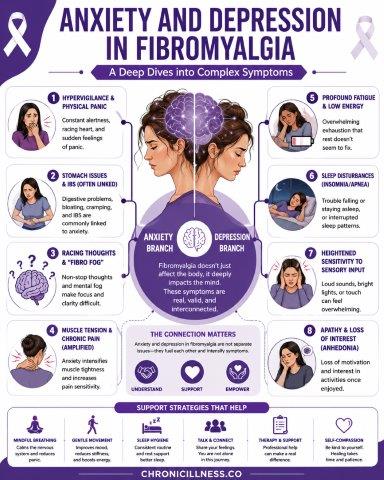
Fibromyalgia is often recognized as a condition involving widespread pain, fatigue, and physical discomfort. However, what many people fail to realize is that fibromyalgia affects far more than muscles and joints. For countless individuals living with this chronic illness, the emotional and psychological burden can be just as overwhelming as the physical symptoms.
Among the most common yet misunderstood challenges associated with fibromyalgia are anxiety and depression. These mental health struggles are not separate issues happening by coincidence. Instead, they are deeply intertwined with the condition itself. The pain, exhaustion, sleep disturbances, sensory overload, and cognitive problems caused by fibromyalgia can significantly affect emotional well-being.
At the same time, anxiety and depression can intensify fibromyalgia symptoms, creating a frustrating cycle where physical pain worsens mental distress, and emotional struggles amplify bodily discomfort.
Understanding this relationship is essential for improving quality of life, receiving proper treatment, and reducing the stigma that many fibromyalgia patients face.
Understanding Fibromyalgia Beyond Physical Pain
Fibromyalgia is a chronic disorder primarily characterized by widespread musculoskeletal pain, fatigue, sleep disruption, cognitive difficulties, and nervous system hypersensitivity.
While the exact cause remains uncertain, researchers believe fibromyalgia involves abnormalities in how the brain and spinal cord process pain signals.
This phenomenon is often referred to as central sensitization, meaning the nervous system becomes overly reactive.
As a result:
- Pain feels more intense
- Minor discomfort may feel severe
- Sensory stimulation becomes overwhelming
- Stress responses become heightened
Because the nervous system is deeply connected to emotional regulation, mental health symptoms often become part of the fibromyalgia experience.
For many people, fibromyalgia impacts every aspect of daily life—from work and relationships to sleep, motivation, and self-esteem.
Why Anxiety and Depression Are Common in Fibromyalgia
Living with chronic pain alone can significantly increase emotional distress. However, in fibromyalgia, anxiety and depression appear to involve more than emotional reactions to illness.
Research suggests that similar biological systems may contribute to both chronic pain and mood disorders.
Shared Brain Chemistry
Neurotransmitters involved in fibromyalgia also influence emotional health.
These include:
- Serotonin
- Dopamine
- Norepinephrine
These brain chemicals help regulate:
- Mood
- Sleep
- Pain perception
- Stress response
- Energy levels
Imbalances may contribute to both physical and emotional symptoms.
For example, low serotonin levels are linked to increased pain sensitivity, anxiety, poor sleep, and depression.
This overlap helps explain why emotional symptoms often appear alongside fibromyalgia.
The Burden of Chronic Illness
Fibromyalgia is unpredictable.
Symptoms may fluctuate dramatically from day to day.
Someone may feel relatively functional one morning and unable to leave bed the next.
This uncertainty creates enormous emotional strain.
People living with fibromyalgia often struggle with:
- Loss of independence
- Reduced work ability
- Financial pressure
- Relationship stress
- Social isolation
- Feeling misunderstood
Over time, these challenges can significantly affect mental health.
Anxiety in Fibromyalgia
Anxiety is one of the most commonly reported emotional symptoms in fibromyalgia.
It often goes far beyond ordinary worry.
Many people experience constant nervous system hyperactivity that feels impossible to switch off.
Hypervigilance and Physical Panic
Fibromyalgia can place the nervous system in a near-constant state of alertness.
This may result in:
- Racing heart
- Muscle tension
- Restlessness
- Sudden panic sensations
- Feeling “on edge” all the time
Some people describe constantly scanning their bodies for pain or anticipating symptom flare-ups.
This heightened awareness can create a cycle of fear and stress.
When symptoms suddenly worsen, anxiety may intensify even further.
Fear of Unpredictable Symptoms
Fibromyalgia symptoms often appear without warning.
People may fear:
- Pain flare-ups in public
- Sudden exhaustion
- Forgetfulness at work
- Sleep disruption
- Loss of mobility during bad days
This uncertainty can make planning daily life extremely stressful.
Many begin avoiding activities they once enjoyed due to fear of worsening symptoms.
Health Anxiety
Because fibromyalgia symptoms can affect nearly every part of the body, some individuals become anxious about underlying illnesses.
Pain, tingling, dizziness, chest discomfort, headaches, digestive problems, and fatigue may trigger concerns about serious health conditions.
Repeated medical appointments without clear answers can increase frustration and worry.
Digestive Issues and Anxiety in Fibromyalgia
Many fibromyalgia patients experience stomach problems and irritable bowel syndrome (IBS).
Common symptoms include:
- Bloating
- Cramping
- Nausea
- Constipation
- Diarrhea
- Abdominal pain
The gut and brain communicate closely through what is known as the gut-brain axis.
Stress and anxiety can worsen digestive symptoms.
At the same time, chronic digestive discomfort can contribute to emotional distress.
This creates another exhausting cycle where physical symptoms and anxiety reinforce one another.
Racing Thoughts and “Fibro Fog”
One frustrating aspect of fibromyalgia is cognitive dysfunction, often called fibro fog.
Symptoms may include:
- Forgetfulness
- Trouble concentrating
- Mental exhaustion
- Difficulty finding words
- Slower thinking
Many people experience racing thoughts alongside mental fog.
This combination can feel overwhelming.
Someone may struggle to organize thoughts while simultaneously worrying about responsibilities they can no longer manage as easily.
The emotional toll of cognitive struggles can lead to embarrassment, frustration, and self-doubt.
Some individuals begin questioning their intelligence or abilities despite being highly capable before illness.
Depression in Fibromyalgia
Depression is also highly common among individuals living with fibromyalgia.
This is not simply sadness about having pain.
Depression may develop through a combination of biological, neurological, emotional, and social factors.
Persistent Exhaustion and Emotional Burnout
Fibromyalgia fatigue is often profound.
Many people describe feeling drained no matter how much sleep they get.
Simple daily tasks may become exhausting.
Over time, this constant struggle can lead to emotional burnout.
When energy disappears, motivation often follows.
Things that once felt enjoyable may begin feeling impossible.
Loss of Identity
Fibromyalgia changes lives.
People who were once highly active, career-focused, social, or physically independent may suddenly find themselves unable to function in the same way.
This shift can trigger grief.
Many people mourn:
- Their old routines
- Their career abilities
- Physical strength
- Social life
- Hobbies they once loved
This grief may contribute to depression.
Apathy and Loss of Interest (Anhedonia)
A common symptom of depression is anhedonia, meaning reduced pleasure or interest in activities.
Someone with fibromyalgia may stop enjoying:
- Exercise
- Social outings
- Creativity
- Family events
- Entertainment
This is not laziness or lack of effort.
Depression changes how the brain experiences reward and motivation.
Sleep Disturbances Make Everything Worse
Poor sleep is one of the strongest contributors to both anxiety and depression in fibromyalgia.
Many patients experience:
- Insomnia
- Frequent waking
- Restless sleep
- Light sleep
- Sleep apnea
- Non-restorative sleep
When sleep quality suffers:
- Pain increases
- Anxiety worsens
- Mood declines
- Energy drops
- Cognitive function weakens
Lack of restorative sleep can make even small stressors feel overwhelming.
Improving sleep quality often becomes one of the most important parts of symptom management.
Heightened Sensory Sensitivity
Fibromyalgia often increases sensitivity to sensory input.
People may feel overwhelmed by:
- Loud sounds
- Bright lights
- Strong smells
- Crowded places
- Physical touch
This sensory overload can increase anxiety and irritability.
Daily environments that seem manageable for others may feel exhausting for someone with fibromyalgia.
Constant overstimulation may contribute to nervous system exhaustion and emotional distress.
The Pain-Anxiety-Depression Cycle
Fibromyalgia often creates a difficult cycle that becomes hard to break.
Pain Increases Anxiety
Pain creates uncertainty and fear.
People worry about worsening symptoms or losing functionality.
Anxiety Increases Pain
Stress activates the nervous system.
Muscles tighten, sleep worsens, and pain sensitivity increases.
Pain and Anxiety Contribute to Depression
Persistent suffering may lead to hopelessness, isolation, and emotional exhaustion.
Depression Worsens Physical Symptoms
Low motivation may reduce movement, worsen sleep, and intensify fatigue.
This cycle can continue unless multiple symptoms are addressed together.
Recognizing the connection is the first step toward improvement.
Why Mental Health Symptoms Should Never Be Dismissed
One of the most damaging misconceptions about fibromyalgia is the belief that symptoms are “all in your head.”
This misunderstanding hurts patients deeply.
Anxiety and depression in fibromyalgia are real medical experiences, not signs of weakness or exaggeration.
Mental health struggles do not make pain imaginary.
Instead, chronic pain and emotional symptoms often affect the same biological systems.
Supporting emotional health is not dismissing physical pain—it is treating the whole person.
Effective Strategies for Managing Anxiety and Depression in Fibromyalgia
While there is no single cure, many people find relief through combined approaches.
Gentle Movement
Physical activity may seem impossible during flare-ups, but gentle movement can improve mood and reduce stiffness.
Helpful options include:
- Walking
- Stretching
- Swimming
- Yoga
- Low-impact exercise
Movement can support nervous system regulation and release mood-supporting chemicals.
Mindful Breathing and Relaxation
Stress reduction techniques may calm the nervous system.
Many people benefit from:
- Deep breathing exercises
- Meditation
- Guided relaxation
- Mindfulness practices
These approaches may help reduce panic sensations and muscle tension.
Sleep Hygiene
Improving sleep habits can significantly affect both pain and emotional health.
Helpful habits include:
- Maintaining consistent sleep schedules
- Reducing screen time before bed
- Creating a calming sleep environment
- Limiting caffeine late in the day
Therapy and Emotional Support
Talking to a therapist familiar with chronic illness can provide coping tools.
Therapy may help with:
Emotional support should never be viewed as weakness.
Social Connection
Isolation can worsen mental health symptoms.
Talking with supportive friends, family members, or chronic illness communities may help reduce loneliness.
Being understood can be incredibly healing.
Self-Compassion
Fibromyalgia often forces people to adjust expectations.
Learning to be kind to yourself matters.
Resting when needed does not mean failure.
Living with chronic illness requires patience, flexibility, and resilience.
Supporting Someone With Fibromyalgia
If someone you love has fibromyalgia, emotional support matters.
Helpful ways to support them include:
Believe Their Symptoms
Pain and fatigue may not always be visible.
Validation matters.
Be Patient
Plans may change unexpectedly due to flare-ups.
Listen Without Judgment
Sometimes people need understanding more than solutions.
Encourage Professional Support
Mental health care can be an important part of symptom management.
Compassion can make a major difference in someone’s healing journey.
Final Thoughts
Anxiety and depression are deeply connected to fibromyalgia, affecting millions of people navigating life with chronic pain. These emotional symptoms are not separate from the illness—they are often intertwined with the same nervous system disruptions, sleep disturbances, hormonal imbalances, and physical suffering that define fibromyalgia.
Hypervigilance, panic, digestive issues, racing thoughts, fatigue, sensory sensitivity, sleep problems, and emotional numbness can all become part of the experience.
Most importantly, these struggles are real.
Fibromyalgia affects both body and mind, and treating one without addressing the other often leaves people suffering unnecessarily.
Healing may not happen overnight, but support, understanding, proper care, and compassionate treatment can help people regain hope, improve quality of life, and feel less alone in their journey.

For More Information Related to Fibromyalgia Visit below sites:
References:
Join Our Whatsapp Fibromyalgia Community
Click here to Join Our Whatsapp Community
Official Fibromyalgia Blogs
Click here to Get the latest Fibromyalgia Updates
Fibromyalgia Stores
Comments
Post a Comment