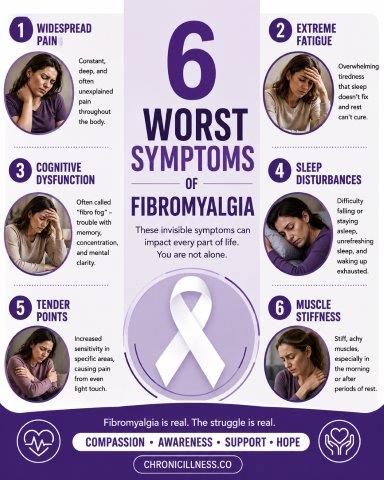
Fibromyalgia is a chronic condition that affects millions of people worldwide, yet many still struggle to understand what it truly feels like to live with it. Often described as an “invisible illness,” fibromyalgia can cause severe physical discomfort, mental exhaustion, and emotional strain that significantly interfere with daily life. Because symptoms may not always be visible to others, many individuals face misunderstanding, delayed diagnosis, and frustration while trying to explain what they are experiencing.
The condition affects people differently, and symptoms may vary in intensity from one day to another. Some people experience manageable discomfort, while others face debilitating pain and fatigue that impact their ability to work, socialize, or even complete simple daily activities.
Understanding the worst symptoms of fibromyalgia is essential for recognizing the challenges people face and encouraging compassion, awareness, and support. In this article, we will explore six of the most difficult symptoms associated with fibromyalgia and how they can influence overall well-being.
What Is Fibromyalgia?
Fibromyalgia is a long-term disorder characterized by widespread pain, fatigue, sleep disturbances, and cognitive difficulties. Researchers believe the condition affects how the brain and nervous system process pain signals, causing heightened sensitivity throughout the body.
Although the exact cause remains unclear, several factors may contribute to fibromyalgia, including:
Because symptoms overlap with many other conditions, diagnosis can sometimes take years. Many people are initially told their symptoms are stress-related or dismissed entirely, making awareness especially important.
1. Widespread Pain
One of the most recognized and often most difficult symptoms of fibromyalgia is widespread pain. This pain is usually constant, deep, and difficult to explain to someone who has never experienced it.
What Does Fibromyalgia Pain Feel Like?
Fibromyalgia pain is not always the same for everyone. It may feel like:
- Deep muscle aching
- Burning sensations
- Sharp or stabbing pain
- Throbbing discomfort
- Persistent soreness throughout the body
The pain commonly affects multiple areas, including:
- Neck
- Shoulders
- Back
- Hips
- Arms
- Legs
Unlike soreness after exercise or temporary discomfort from an injury, fibromyalgia pain tends to linger and may worsen unexpectedly.
Why Pain Can Feel Overwhelming
Many people describe fibromyalgia pain as exhausting because it is constant. Even on good days, some level of discomfort may still exist.
Pain flare-ups can occur due to:
- Stress
- Weather changes
- Poor sleep
- Overexertion
- Illness
The unpredictability of symptoms often makes planning activities difficult and can create emotional stress.
2. Extreme Fatigue
Fatigue in fibromyalgia goes far beyond normal tiredness. It is an overwhelming exhaustion that sleep and rest often fail to improve.
More Than Feeling Tired
People with fibromyalgia often explain fatigue as:
- Feeling drained upon waking up
- Struggling to stay energized throughout the day
- Needing frequent rest breaks
- Feeling physically exhausted after minor tasks
Simple responsibilities like cleaning, shopping, or working can become incredibly challenging.
Why Fatigue Happens
Several factors may contribute to fibromyalgia-related fatigue, including:
Poor Sleep Quality
Many people with fibromyalgia struggle to get restorative sleep, leaving them physically depleted.
Chronic Pain
Persistent pain places continuous stress on the body, which can increase exhaustion.
Nervous System Changes
Researchers believe fibromyalgia affects energy regulation and nervous system function.
Impact on Daily Life
Extreme fatigue may interfere with:
- Employment
- Parenting responsibilities
- Social activities
- Exercise routines
- Mental focus
For some individuals, fatigue becomes just as disabling as pain itself.
3. Cognitive Dysfunction (Fibro Fog)
One of the most frustrating symptoms of fibromyalgia is cognitive dysfunction, commonly known as fibro fog.
Fibro fog can make people feel mentally disconnected or unable to think clearly, often affecting confidence and productivity.
Common Signs of Fibro Fog
Symptoms may include:
- Difficulty concentrating
- Forgetfulness
- Trouble remembering names or appointments
- Mental confusion
- Losing track of conversations
- Difficulty processing information
Everyday Challenges of Fibro Fog
Brain fog may affect daily life in unexpected ways.
For example, someone may:
- Walk into a room and forget why
- Forget important tasks
- Lose focus during work meetings
- Struggle to follow conversations
- Have trouble finding the right words
These experiences can feel embarrassing or discouraging, especially for individuals who once had strong memory or multitasking abilities.
What Makes Fibro Fog Worse?
Cognitive symptoms often become more severe during:
- Stressful periods
- Pain flare-ups
- Poor sleep
- Emotional overwhelm
Understanding that fibro fog is a symptom—not laziness or lack of intelligence—is incredibly important.
4. Sleep Disturbances
Sleep problems are among the most difficult aspects of fibromyalgia because they can worsen nearly every other symptom.
Many people with fibromyalgia struggle with:
- Difficulty falling asleep
- Trouble staying asleep
- Frequent nighttime waking
- Restless sleep
- Waking up feeling exhausted
Why Sleep Feels Unrefreshing
Even after spending many hours in bed, people with fibromyalgia may still wake up feeling tired.
Researchers believe this happens because the body struggles to reach deep restorative sleep stages.
As a result, poor sleep contributes to:
Sleep issues can create a frustrating cycle where pain disrupts rest, and lack of sleep intensifies pain.
Morning Struggles
Mornings may feel particularly difficult due to:
- Body aches
- Muscle stiffness
- Low energy
- Mental fog
It may take hours before some people begin to feel functional.
5. Tender Points and Increased Sensitivity
Fibromyalgia is known for causing tender points, or areas of the body that become extremely sensitive to touch or pressure.
What Are Tender Points?
Tender points are specific areas where even mild pressure may cause discomfort.
Common locations include:
- Neck
- Shoulders
- Upper back
- Hips
- Knees
- Elbows
Someone may feel pain from things others barely notice, such as:
- Tight clothing
- Gentle touch
- Carrying bags
- Sitting too long
Heightened Sensory Sensitivity
Fibromyalgia may also increase sensitivity to:
Noise
Loud environments can feel overwhelming.
Bright Lights
Light sensitivity may trigger discomfort or headaches.
Temperature Changes
Extreme heat or cold may worsen symptoms.
Smells
Strong scents can sometimes trigger flare-ups.
This heightened sensitivity often makes crowded or overstimulating environments difficult to tolerate.
6. Muscle Stiffness
Muscle stiffness is another major symptom that can make everyday movement uncomfortable and frustrating.
What Does Fibromyalgia Stiffness Feel Like?
People often describe stiffness as:
- Tight muscles
- Aching joints
- Limited mobility
- Difficulty moving after rest
The stiffness is often most noticeable:
- In the morning
- After sitting for long periods
- During cold weather
- After physical activity
Why Movement Becomes Difficult
Muscle stiffness can make ordinary activities feel exhausting.
Tasks like:
- Climbing stairs
- Bending down
- Walking long distances
- Carrying groceries
may become physically demanding.
While gentle movement often helps reduce stiffness, overexertion may trigger increased pain.
The Emotional Impact of Fibromyalgia
Fibromyalgia does not only affect the body—it can also deeply affect emotional well-being.
Living with chronic symptoms may lead to feelings of:
- Frustration
- Isolation
- Anxiety
- Sadness
- Emotional exhaustion
Because the illness is invisible, some people feel misunderstood by family, friends, coworkers, or healthcare providers.
Comments like:
- “You don’t look sick.”
- “Maybe you just need more sleep.”
- “It’s probably stress.”
can feel dismissive and emotionally painful.
Support and validation play a major role in helping individuals cope with chronic illness.
What Can Help Manage Fibromyalgia Symptoms?
Although fibromyalgia currently has no cure, many strategies may help reduce symptom severity and improve quality of life.
Gentle Exercise
Light movement may help decrease pain and stiffness.
Helpful activities include:
- Walking
- Stretching
- Swimming
- Yoga
- Low-impact exercise
Consistency is usually more effective than intense workouts.
Stress Management
Stress commonly worsens fibromyalgia symptoms.
Helpful approaches may include:
- Meditation
- Deep breathing exercises
- Relaxation techniques
- Counseling
- Journaling
Better Sleep Habits
Improving sleep quality can support symptom management.
Helpful habits include:
- Going to bed at consistent times
- Limiting caffeine late in the day
- Reducing screen time before bed
- Creating a calming sleep routine
Heat Therapy
Warm baths, heating pads, and heated blankets may provide relief for aching muscles.
Nutrition and Hydration
A balanced diet and proper hydration may support energy levels and overall health.
Some people notice improvements by reducing highly processed foods and focusing on nutrient-rich meals.
Support Systems Matter
Living with fibromyalgia can feel lonely, which makes emotional support especially valuable.
Connecting with:
- Healthcare providers
- Support groups
- Family members
- Trusted friends
can help reduce feelings of isolation.
When to Seek Medical Advice
If you experience ongoing widespread pain, severe fatigue, poor sleep, mental fog, stiffness, or unusual tenderness, speaking with a healthcare professional may help identify the cause.
Fibromyalgia diagnosis often involves ruling out other conditions, so patience may be necessary during the process.
Keeping track of symptoms in a journal may help doctors better understand patterns and severity.
Final Thoughts
Fibromyalgia is a real and often misunderstood condition that can affect every aspect of daily life. Symptoms like widespread pain, extreme fatigue, cognitive dysfunction, sleep disturbances, tender points, and muscle stiffness may be invisible to others, but their impact is very real.
Living with fibromyalgia can feel physically and emotionally exhausting, especially when symptoms fluctuate unpredictably. However, awareness, compassion, and proper support can make a meaningful difference.
Recognizing these six worst symptoms of fibromyalgia may help individuals feel validated in their experiences and encourage others to better understand the realities of living with this chronic condition. No one should have to face chronic pain alone, and support is always important on the journey toward better symptom management.

For More Information Related to Fibromyalgia Visit below sites:
References:
Join Our Whatsapp Fibromyalgia Community
Click here to Join Our Whatsapp Community
Official Fibromyalgia Blogs
Click here to Get the latest Fibromyalgia Updates
Fibromyalgia Stores
Comments
Post a Comment