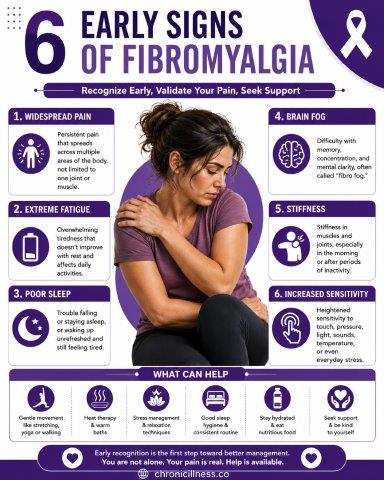
Fibromyalgia is a chronic condition that affects millions of people worldwide, yet it often goes undiagnosed for years. Many individuals experience symptoms without understanding the root cause, often assuming their discomfort is due to stress, overwork, aging, or other medical conditions. Because fibromyalgia symptoms can vary widely and overlap with other illnesses, recognizing the early warning signs is essential for getting proper support and management.
Although fibromyalgia is not fully understood, it is believed to involve abnormal pain processing in the nervous system, causing heightened sensitivity to pain and discomfort. Early identification of symptoms can make a significant difference in improving quality of life, reducing flare-ups, and helping people feel validated in their experiences.
This article explores the six early signs of fibromyalgia, how they may appear in everyday life, and what can help support better symptom management.
Understanding Fibromyalgia
Fibromyalgia is a long-term condition characterized by widespread pain, fatigue, sleep disturbances, and cognitive difficulties. It can affect people of all ages, although it is more commonly diagnosed in women. The condition may develop gradually or appear after physical trauma, illness, emotional stress, or surgery.
Unlike some illnesses that show up clearly in blood tests or scans, fibromyalgia often lacks visible markers, making diagnosis challenging. This can leave people feeling frustrated or misunderstood, especially when symptoms interfere with daily activities.
Recognizing the early signs may encourage someone to seek medical guidance sooner, potentially leading to better symptom management strategies.
1. Widespread Pain
One of the earliest and most noticeable signs of fibromyalgia is persistent, widespread pain. Unlike localized pain that affects one joint or muscle after an injury, fibromyalgia pain tends to spread across multiple areas of the body.
What Does Fibromyalgia Pain Feel Like?
People often describe fibromyalgia pain as:
- A deep, aching sensation
- Burning or throbbing discomfort
- Sharp pain that comes and goes
- Muscle tenderness or soreness
- Pain that moves around the body
The discomfort may affect areas such as the shoulders, back, hips, arms, neck, and legs. Some individuals wake up sore, while others notice pain increasing after stress or physical activity.
Why Early Recognition Matters
Because widespread pain can resemble arthritis, chronic fatigue syndrome, or muscle strain, many people dismiss it as temporary discomfort. However, if pain persists for several weeks or months and affects multiple body regions, it may signal something more complex.
Pain that interferes with work, sleep, exercise, or social activities deserves attention and should not be ignored.
2. Extreme Fatigue
Feeling tired after a busy day is normal, but extreme fatigue that does not improve with rest is another common early sign of fibromyalgia.
More Than Ordinary Tiredness
Fibromyalgia-related fatigue can feel overwhelming. Many people describe it as:
- Feeling exhausted despite sleeping for hours
- Struggling to complete everyday tasks
- Lacking energy for social or work activities
- Feeling physically drained after minor effort
This exhaustion can make simple routines feel unusually difficult. Even activities like grocery shopping, walking short distances, or concentrating at work may become exhausting.
Why Fatigue Happens
Researchers believe fatigue may be linked to disrupted sleep patterns, nervous system changes, and the body's heightened stress response. Since fibromyalgia often interferes with restorative sleep, the body may struggle to recharge properly.
Persistent fatigue should never be dismissed as laziness or lack of motivation. When ongoing exhaustion significantly affects daily life, it may indicate an underlying health issue.
3. Poor Sleep Quality
Many people with fibromyalgia experience trouble sleeping, even before receiving a diagnosis. Sleep issues are one of the most frustrating symptoms because they often worsen pain and fatigue.
Signs of Sleep Problems
Early sleep disturbances may include:
- Difficulty falling asleep
- Frequent waking during the night
- Waking up feeling unrefreshed
- Restless sleep
- Trouble staying asleep
Some people sleep for long periods but still wake up feeling exhausted, as though they never rested at all.
The Sleep-Pain Connection
Poor sleep and pain often create a difficult cycle. Pain can make it hard to rest comfortably, while lack of sleep may increase pain sensitivity.
For many people, mornings become especially difficult due to body aches, stiffness, and exhaustion.
Creating healthy sleep habits may not eliminate symptoms entirely, but improving sleep quality can often help reduce flare-ups and increase energy levels.
4. Brain Fog
One symptom that surprises many people is brain fog, often referred to as “fibro fog.” This cognitive difficulty can affect concentration, memory, and mental clarity.
Common Symptoms of Brain Fog
Brain fog may include:
- Forgetting appointments or conversations
- Difficulty concentrating on tasks
- Trouble finding the right words
- Feeling mentally slow or distracted
- Difficulty processing information quickly
Many individuals feel frustrated by these changes, especially if they previously had strong focus and organization skills.
How Brain Fog Impacts Daily Life
Brain fog can affect work performance, studying, relationships, and confidence. Someone may lose track of thoughts during conversations or struggle to remember basic tasks.
Stress, poor sleep, fatigue, and pain may all contribute to cognitive difficulties, making symptoms worse during flare-ups.
Although brain fog can feel discouraging, recognizing it as part of a medical condition may help reduce self-blame and encourage better coping strategies.
5. Stiffness in Muscles and Joints
Morning stiffness or body tightness is another early sign often associated with fibromyalgia.
What Does Fibromyalgia Stiffness Feel Like?
Many people report:
- Difficulty moving after waking up
- Tight muscles in the neck, shoulders, or back
- Joint discomfort without visible swelling
- Feeling stiff after sitting for long periods
Stiffness may improve somewhat with gentle movement but often returns after inactivity.
Morning Symptoms Can Be Stronger
For some individuals, mornings are particularly difficult. It may take time to feel physically mobile, and even small movements can feel uncomfortable.
Cold weather, stress, overexertion, or poor sleep can make stiffness worse.
Since fibromyalgia does not cause joint damage like arthritis, stiffness may exist without inflammation or visible changes on medical imaging.
6. Increased Sensitivity
People with fibromyalgia often experience heightened sensitivity to different physical sensations. This increased sensitivity may appear early and can affect daily comfort.
Types of Sensitivity
Someone with fibromyalgia may become more sensitive to:
Touch and Pressure
Gentle pressure that normally feels harmless may become painful or uncomfortable.
Temperature Changes
Hot or cold weather may feel more intense than usual, triggering discomfort.
Light and Sound
Bright lights, loud environments, or excessive noise may feel overwhelming.
Smells and Sensory Input
Strong scents or busy surroundings can sometimes worsen symptoms.
Stress
Emotional stress often plays a major role in triggering symptom flare-ups.
Why Sensitivity Occurs
Experts believe fibromyalgia changes how the brain processes sensory signals, causing the nervous system to overreact to stimuli.
This does not mean symptoms are imagined. The pain and sensitivity are real experiences that can deeply impact physical and emotional well-being.
Why Fibromyalgia Is Often Misunderstood
Fibromyalgia can be difficult to diagnose because symptoms vary from person to person and overlap with many other conditions.
Someone may be told their symptoms are caused by:
- Stress
- Anxiety
- Depression
- Poor sleep habits
- Overworking
- Aging
While emotional health and stress can influence symptoms, fibromyalgia is a legitimate medical condition involving chronic pain and nervous system dysfunction.
Many individuals spend years seeking answers before receiving a diagnosis. Recognizing symptoms early can help reduce confusion and encourage timely support.
What Can Help Manage Early Fibromyalgia Symptoms?
Although there is currently no cure for fibromyalgia, many strategies may help reduce discomfort and improve quality of life.
Gentle Movement and Exercise
Low-impact movement can help reduce stiffness and improve mobility.
Helpful options include:
- Stretching
- Yoga
- Walking
- Swimming
- Light strength training
The goal is consistency rather than intensity. Overexertion may worsen symptoms, so gradual progress matters.
Heat Therapy
Warmth may help relax muscles and reduce discomfort.
Many people find relief through:
- Warm baths
- Heating pads
- Heated blankets
- Gentle hot compresses
Heat therapy can be especially helpful during flare-ups or cold weather.
Stress Management
Stress often worsens fibromyalgia symptoms, making emotional well-being an important part of symptom management.
Helpful techniques may include:
- Deep breathing exercises
- Meditation
- Relaxation techniques
- Journaling
- Counseling or therapy
Reducing stress does not eliminate fibromyalgia but may lessen symptom severity.
Prioritizing Sleep Hygiene
Better sleep habits may improve pain and fatigue levels.
Consider:
- Keeping a consistent bedtime
- Limiting screen time before sleep
- Creating a calming nighttime routine
- Avoiding caffeine late in the day
- Keeping the bedroom cool and comfortable
Small improvements in sleep quality can often make a noticeable difference.
Staying Hydrated and Eating Nutritious Foods
While no single diet cures fibromyalgia, balanced nutrition may support energy and overall health.
Many people benefit from:
- Drinking enough water
- Eating whole foods
- Reducing processed foods
- Including fruits and vegetables
- Choosing lean proteins and healthy fats
Paying attention to how foods affect symptoms may also be helpful.
Seeking Emotional and Medical Support
Living with chronic symptoms can feel isolating. Seeking support from healthcare providers, support groups, trusted friends, or family members may help people feel less alone.
Validation matters. Chronic pain is difficult, and emotional support can improve resilience and coping.
When to Talk to a Doctor
If you experience persistent widespread pain, extreme fatigue, poor sleep, brain fog, stiffness, or unusual sensitivity, it may be worth discussing these symptoms with a healthcare professional.
Doctors may rule out other medical conditions before considering fibromyalgia. Because diagnosis often takes time, keeping track of symptoms in a journal may help identify patterns and support conversations during appointments.
Early intervention can lead to better symptom management and a stronger understanding of personal triggers.
Final Thoughts
Fibromyalgia often begins quietly, with symptoms that seem unrelated or easy to dismiss. Widespread pain, fatigue, poor sleep, brain fog, stiffness, and increased sensitivity may develop gradually, leaving many people confused about what is happening to their bodies.
Recognizing these early signs of fibromyalgia is important because awareness can lead to earlier support, lifestyle adjustments, and medical guidance. While living with fibromyalgia can be challenging, understanding symptoms is the first step toward managing them more effectively.
If these signs feel familiar, remember that persistent pain and exhaustion deserve attention. Listening to your body and seeking help can make a meaningful difference in navigating life with fibromyalgia.

For More Information Related to Fibromyalgia Visit below sites:
References:
Join Our Whatsapp Fibromyalgia Community
Click here to Join Our Whatsapp Community
Official Fibromyalgia Blogs
Click here to Get the latest Fibromyalgia Updates
Fibromyalgia Stores
Comments
Post a Comment